
Every superhero has an origin story, and great companies have them, too. We sat down with Founders Ben Souva and David Kerns to unpack the early days of Breasy and what put the company on a path to a waitlist from major metro areas across the country.
Q: Ben & David, we’ll get to Breasy’s launch momentarily, but before we get there, tell us about your pre-Breasy lives. Where are you from? What were your first “real” jobs?
Ben:
I grew up in a small town called Cave Creek, just north of Phoenix, Arizona. My dad’s a residential general contractor and has worked for himself my entire life, so I grew up surrounded by equipment, materials, and subcontractors coming and going—our house was basically his job site office. There was always something being built, fixed, or planned.
In high school and throughout college, while earning my degree in Technology Entrepreneurship and Management at ASU, I worked for two small, family-run businesses: the local biker bar and a plumbing supply company. In both roles, I was right-hand to the owners and got an inside look at what it really takes to run a small business—the chaos, the grind, and the sense of ownership behind every decision.
After college, I was fascinated by the startup world and wanted to experience what it meant to build something at scale. I joined ZipRecruiter, which had just raised a record-setting Series A at the time, and spent nearly seven years there in sales. I eventually worked my way up to selling nationwide to Fortune 1000 executives—an experience that taught me that those leaders, despite the size of their organizations, weren’t so different from my dad or the small business owners I’d worked for growing up.

That realization reignited my drive to build something of my own. I bought a local landscaping company from a retiring owner, and that’s what ultimately pulled me into the world of service businesses—and set the foundation for what would become Breasy.
David:
I grew up in Danville, a small town in the East Bay near San Francisco. Technology has always been part of my life—my dad worked at startups during the dotcom era, and my mom has a background in auditing and finance for tech companies. One of her favorite stories is auditing Apple’s tax returns back when it was still a startup in the 70s and 80s.
I’ve always been interested in technology and software, though I didn’t study it in school. I have two degrees in economics from UCLA, specializing in data science. But honestly, that’s not what I’m drawn to. What really interests me is the design and implementation of guided experiences—whether that’s spatial design, interiors, or the large-scale interactive art installations I create for places like Burning Man. I’m particularly focused on simplifying complex systems and making complicated processes easier to digest and more valuable for people.
After UCLA, I worked as an auditor at Deloitte, dealing with big financial service companies. But that wasn’t for me long-term. I’m a maker, a creator—I like to build stuff, and always dreamed of having a company/business of my own.
So after getting my master’s degree, some friends I met through the UCLA rowing team and I launched CrewLAB, a software company building a team community platform for sports teams. Think Slack, Strava, and Google Calendar combined for a high school track team or college swim team. We raised money, and things went well—still are going well, I’m on the board of directors. That’s where I learned about digital product design, platform implementation, customer onboarding, and marketing. But my focus has always been less about marketing hacks and more about getting people where they want to go.
I am interested in creating an environment that helps people navigate to a better outcome—whether that outcome is a better team environment for athletes, an easier way for field teams to make money, or a simpler way for customers to complete work orders. This is what I have focused on most recently in my career, and my skills play well to being able to create that. I enjoy spending my time this way.
Q: What were you seeing that put you on a path to exploring what would eventually become Breasy?
David:
Without Ben Souva, there’s no Breasy. I have to credit him and what he’d already done for years at BJ’s and Trim for getting this all going. He understands exterior maintenance deeply, knows what to focus on, and had already proven out the service business model.
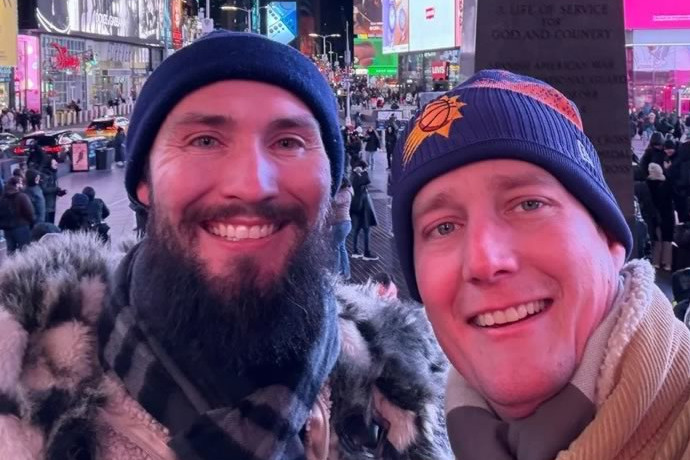
Ben launched Breasy in November 2023, and I was still working at my previous company. I was pretty burned out, though, and I wanted to see more financial upside, more opportunity to actually make money. With a software company, it takes a long time to actually get to revenue. With Breasy, it was easier to see what it was.
That was the biggest thing. With Breasy, it’s so clear what we’re doing, what value we’re providing, what service we’re providing. For me, it’s a lot easier to focus on the building blocks that go into that. The work order process is very well defined, and what we have to do is very well defined. And because that’s so well defined, we can move more easily in and around the different ways to achieve that outcome—the different paths to the same goal. That’s very interesting to me and really fires me up, solving those types of problems.
I saw two paths to scale. One was using the existing systems to grow gradually, but that would require massive cost and human resources to manage, which is what happened at Trim, his previous company. Or we could build our own platform that underpins the work. When people think Breasy, they’d think about both the service business and the Breasy application that supports work order completion.
The business was already rolling, completing a lot of jobs with clear processes and external technology—a proven model. I saw a clear path to amplifying it by building our own in-house platform to streamline operations. I dove into Breasy V1 in early 2024 and launched the first version to migrate from our existing CRM within two months. We immediately started seeing positive results from controlling the whole process ourselves. It was great.
Ben:
After purchasing a small landscaping company in 2018 from a retiring owner—a deal that turned out to be a bit of a lemon—I got a crash course in what it really means to run a service business. In our second week, the undercarriage literally fell out of the truck, and by the first month, we’d had two flat tires on the trailer. From there, I learned fast—through grit, late nights, and a lot of problem-solving—as we went on to acquire three more landscaping companies and ultimately grew the business more than 60×, employing around 100 people.
Along the way, I saw firsthand how broken the systems are for local service businesses.
On one side, contractors were rarely good at marketing and forced to buy expensive, low-quality leads or navigate messy partnerships with property managers using disconnected software.
On the other hand, customers—especially property managers—struggled to find consistent, reliable vendors who could communicate clearly and deliver predictable results.
Those two pain points were the spark for Breasy. I sold back my portion of the landscaping business and launched Breasy with a vision to help thousands of hardworking Americans make more money—more easily—by filling their schedules with nearby work that fits what they do and when they’re available.
For property managers and homeowners, our goal was simple: make getting maintenance done as easy as calling an Uber or receiving an Amazon delivery.
Q: How did you all first meet? What made you think teaming up might make sense?
Ben:
David and I had known each other for years through mutual friends and had crossed paths a handful of times, but our stars really aligned during a group trip to Bali celebrating a few friends’ 30th birthdays. At the time, I was just a few weeks into launching Breasy, and David was six years into running a successful software venture.
Out of a group of about twenty people, we were the two who kept sneaking away in the middle of the night to fix bugs or answer customer messages. After a couple of days, we started comparing notes—what we were working on, what was breaking, and what we were learning from our customers.
By the end of the trip, it was obvious how complementary our skill sets were. My background in sales and service operations paired perfectly with David’s analytical and product-driven approach from his time at Deloitte and as a co-founder in tech. Not long after we got back, we decided to team up—with David taking the lead on fixing our hardest problems, and me focused on finding the next big ones to solve through growth.
David:
I met Ben in December 2018, around New Year’s in Lake Tahoe, through close mutual friends. At the time, he was still working in sales at ZipRecruiter and probably starting to think about BJ’s Landscaping. My first impression was that he was a welcoming, super successful guy; someone people wanted to be around. He was always bringing people in—he had rented a great Airbnb that had more than enough space for friends to hang out, so we’d spend afternoons hanging out there before the event.
Fast forward to November 2023 and Ben and I were together again in Bali for a birthday trip with a similar group of friends. We got to talking about what we were working on. The challenges I was having with customer acquisition and selling people on what we were doing were all things he was really good at. I excelled at thinking about and managing the things he focused on at Breasy: the systems, the processes, and truly understanding what a day in the life looks like for someone working there.
What really attracted us to each other was that we both just like to execute. We like to get things done and push things out. Prior business partners we’d both had were much more like, “Oh, we should think about it, we should talk about it.” Whereas Ben’s the type of guy that’s like, “Let’s just do it and see what happens. We can always change it later if it wasn’t the right thing to do.” Taking more calculated risks, more calculated bets, experimenting more with a lower barrier to doing it—just go do it and see what happens.
We teamed up full-time in April 2024 and have been getting after it ever since.
Q: Let’s rewind to 2023, and you’ve decided to launch a business…What problems were you looking to solve and for whom?
Ben:
The systems and infrastructure are broken. Consumers and property managers match to service providers based on service type and general location, but they fail to account for timing or cost. Furthermore, these matches come from so many different software and platforms that the complexity makes anyone’s head spin, including the service providers. Breasy is solving the infrastructure problem by giving our dedicated field teams one place to manage their work, send communication, fill their schedules and make more money more easily. On the back end, we are connecting our app and distributing everything that needs to be distributed to the consumer or property managers.

When we launched Breasy in 2023, we were both staring at the same problem from different sides. The systems and infrastructure behind property maintenance were completely broken.
For property managers and homeowners, getting a job done meant bouncing between multiple platforms and vendors—none of which talked to each other. You could request a lawn service or repair, but you’d still have no idea when it would actually get scheduled or how much it would cost until it was done.
For contractors and service providers, it wasn’t much better. They were expected to buy low-quality leads, juggle emails and texts from different clients, and manage jobs across five or six different apps—all while trying to keep their crews busy and profitable.
We saw that what was missing wasn’t just better software—it was better infrastructure. Breasy is building the connective tissue between both sides. Our dedicated field teams have one place to manage their work, communicate, fill their schedules, and earn more—while on the back end, our system automatically handles the distribution, updates, and documentation property managers need.
In short, we fix the foundation that connects property managers, homeowners, and service pros. As a result, we complete maintenance with the same predictability and simplicity people expect when they call a ride or track a delivery.
David:
To understand what Breasy does, you need to know what we do (complete work orders for exterior property maintenance—irrigation, tree trimming, fence and deck repair) and what our mission is (Help Field Teams make money easier than ever).
It’s also important to understand the contractors we work with—that’s where we see the biggest struggle in the market. Without Breasy, contractors are basically running their whole business themselves. A lot of them are sole proprietors, and that’s hard. When you’re a guy in a truck, you’re managing customer relationships, making sure jobs get done when you say they will, doing the labor, then handling invoicing and payments—all by one person.
We thought about the issues as they flow through the work order funnel.
- Issue #1: Getting work orders. Where are my sources of work? Breasy solves that. We handle customer sales, marketing, and success. If I’m a field team provider with the skill set, I can partner with Breasy and boom, I have a full pipeline of work with a 90% chance of getting approved. That’s a huge worry removed.
- Issue #2: Staying on schedule. Go to this house, on this day, at this time—that’s hard when you’re in a truck running around. We tell them where to go, when to be there, and who the point of contact is. We take care of all that.
- Issue #3: Getting quotes approved. Every work order is a new contract, a new negotiation, a new set of prices. If they bid on projects themselves, the average approval rate is 20% to 30%. We get 90% of quotes approved. Without us, they’re wasting time buying leads that go nowhere.
- Issue #4: Dispute resolution. If a disagreement arises, it’s Breasy’s name and problem, not theirs. We commit to making it right with a 100% satisfaction guarantee. And we make it fair—the hardest thing in this industry is trust and fairness. Are the prices fair? Are the expectations fair? We help field teams live in a positive environment where they can grow their businesses. We’ve seen people grow five, ten times their business volume, going from part-time work to running their own business full-time.
- Issue #5: Getting cash in the door. We often pay contractors before we get paid by our customers. We can pay them much faster—in some cases, within 24 hours. That’s just something property managers in general aren’t set up to do. Simplifying cash flow helps small businesses enormously.
With those challenges handled, our field teams can really focus on delivering on-time, high-quality work, so everyone wins.
Q: Who were your first few customers? What did they think?
Ben:
When we first onboard a dedicated field team, we talk to them about their challenges with their existing business, what preferences they have for work and most importantly, what their revenue goals are to run a successful business.
An early example is Mike G out of Phoenix. When he came to Breasy, he was working a full-time job for a larger contractor business and trying to get a side business going, occasionally picking up jobs via word of mouth, friends and family. He didn’t have the time or know-how to generate customers and manage the office side of the business to go out on his own full-time. Working with us, Mike was able to leave his full-time job and now makes a six-figure income. As you can imagine, he’s very happy with the income situation and its consistency.

He also uses our app, which we offer for free, to manage his directly-sourced jobs as well, keeping his whole operation and day on track. We love to hear how our team is growing via our technology.
Fast forward, and we have dedicated field teams across the country who partner with us, and they are our number one customer. We take care of them so they can take great care of consumers and property managers with single-family home maintenance.
On the property manager side, we started getting demand in Phoenix right away and have expanded to new cities as we get cold requests from people who have heard of our model and need our help.
David:
As Ben mentioned, we started in Phoenix, and then Arizona and Dallas/Fort Worth, Texas came quickly thereafter.
Our PM customer segment manages between 50 and 50,000 homes. Our first few customers were really on two sides of the spectrum. There are some big, industrial-grade property managers looking for reliable vendors who can integrate with their existing systems—their own vendor management software, completion metrics, and way of doing things. On the other hand, you have the “mom and pop” property manager with a decent portfolio who wants more quality control and communication, somebody to handle more of the entire process.
The biggest thing that transcends both is integrating with their existing systems. What we do really well is we work within their existing system—no matter what it is. Whether it’s a vendor portal, email, phone, or even text messages, our system connects seamlessly to their existing process.
And we commit to completing the job. If something goes wrong, we commit to making it right, even at our own expense.
Early property managers appreciated our system integration, straightforward approach to quoting, our dedication to following up on approvals, and how professionally we work with tenants so word spread quickly.
The best indicator of success is that they continue to send us work orders and grow the services we offer. For many, we started completing routine maintenance, then tree trimming, then irrigation, and eventually, we’re doing 50 to 80% of the company’s work orders. They continue to work with us and prefer working with us for the simplicity, cost effectiveness and overall experience.
They see the value in a managed service provider handling the actual work order completion versus them having to manage the process themselves. And they see the value in somebody who can work within their systems, no matter what the system is.
Q: The company is a very technology-forward company. Explain how you applied technology to the challenges in the market.
Ben:
For contractors, a simple equation really helps: reduce drive time = make more money.
We set out to build technology that allowed us to not just match services and general areas to our teams but instead looked at drive time. We have integrated routing features that show us how much time a team spends driving in a day and optimize the routes to reduce time spent on the road.
Today, when our customers send us new job requests, we know down to the minute whether Mike can complete that job today—because it is a five-minute drive and he has availability for this service—or if the job will wait until tomorrow because it is too far and we have fully allocated everyone else.
David:
The core challenge in this market is trust and fairness. Trust in doing what we say we’re going to do, delivering on the scope. And fairness—is the pricing fair, are the completion timelines fair?
Our technology revolves around logistics; we use information, data, and people to transfer things from one place to another to meet those challenges, make the process trustworthy, and increase fairness. We build all our technology around that goal.
Our core design principles are transparency and reliability. If we put something on an app, on a screen, that’s reality, that’s the truth.
We get field teams the right jobs at the right time and place. We understand their schedule and skill sets, and we make it as easy as possible for them to focus on completion—to focus on actually doing quality work that earns them payment.
That’s what we mean by “making money easier than ever.” Less time driving around in the truck, less time going back and forth on quotes, less time trying to find new work orders, and more time actually working to complete jobs.
Same thing for property managers. Less time going back and forth about quotes, less time trying to find vendors, less time shuffling paper, less time dealing with aggravated tenants, and more time focusing on their own business—expanding and focusing on their tenants. That’s what the technology does.
But keep in mind that we don’t position ourselves as a technology company. I love it—I love an app, love a design session, love building screens—but we’re not a tech company.
We’re a service business. We complete work orders, don’t sell software, and don’t sell subscriptions. We get jobs done in a way that keeps our teams and property managers really happy.
Q: What were some of the early upgrades to the platform or offer?
Ben:
When we started out, we operated similarly to many of our property manager partners. We had a database of field teams we had onboarded and spreadsheets to manage the status of open jobs. Although the technology has improved significantly, the most important advancement is our understanding of how we can help the dedicated field teams we partner with. We talk to them daily and are constantly iterating and testing ways to help them complete more jobs easily, and integrating those into our cloud system and mobile apps.
David:
Early upgrades have been on two sides—the service offering and the platform.
We’ve expanded the service types we do and the markets we’re in. We’re doing more complicated jobs, getting into the tenant turn space, and starting to expand into handyman work. We’re also launching new markets—we’re getting into South Florida, Miami, Fort Lauderdale, and the Hollywood area. Just doing more of what we’re doing—more service offerings in more places.
This is a huge upgrade for our customers who need extra services. Consequently, our field teams gain the ability to complete various work types. For example, if a team has handyman capacity, that is awesome. We clearly understand their preferences and service specialties. Furthermore, if they split time between two markets, they gain flexibility. They could spend the first week half in Orlando, then the second half in Miami. Our teams deeply love this schedule flexibility.
On the technology side, it’s recently been around scheduling and locations. We determine location-based and scheduling-based preferences. This shows where I, as a field team member, have capacity to actually do work, and where I, as a property manager, need work done.
That goes back to trust and fairness. If property managers are demanding lower prices, the flip side is that we need higher volume. That’s fairness. For trust, we need to be able to handle that higher volume. So we need more efficient routing technology, more efficient scheduling technology. We need to understand more about where our field teams are and when they’re available to work.
We’ve also spent a lot of time developing AI-based quote strategies that use our database—the pricing data from our existing jobs and pricing sheets we have access to—so we can ensure there’s a fair price for the right scope of work. We use AI to tailor the quotes in a way that’s easily understandable. We’re not trying to add fluff or make things more complicated than they need to be. It just needs to read directly and have an accurate price to the scope of work.
The last thing we’re doing is launching dedicated mobile apps. We’re in the process of launching Breasy Field Team right now (end of October 2025). We have the market manager platform that’s been going strong for just over a year. Our second technology offering is a mobile app for service businesses that helps them understand the pricing, understand the fairness, understand the trust—we’re integrating all those things transparently and reliably.
Q: At the time of writing, Breasy is in 15 major metro markets. Obviously, both property managers and service providers love Breasy. What do you hear from them? Why have so many adopted Breasy?
David:
We balance the feedback we get from field teams, property managers, and our market manager team. And it’s not always easy. I have strong opinions, Ben has strong opinions, and our field teams doing the work have very strong opinions.
What leads to higher adoption is listening and understanding what the needs are—whether it’s a dedicated payments portal or clearer timelines on completion. We work with people to improve not just the single-work-order experience, but the entire process. Like, it’s hard to do quotes without a cell phone signal, or it’s hard to balance schedules when you have jobs outside of Breasy or work with multiple vendors.
We’re willing to meet people where they are, and that’s pretty rare in this space. We’ve done work orders for individual homeowners who just want their lawn mowed, all the way up to field teams with multiple trucks and locations running established businesses. We figure out how to work within their existing schedule.
That dedication to making the process better—not just individual work orders, but the process itself—is what has drawn people to us. We focus on their success, on the goals of the field teams and property managers, rather than just doing more work orders.
Ben: When we started, we were just another vendor for our consumers and property managers. They thought of us as just another landscaping or exterior maintenance business they could use and had fears we would eventually have poor communication, scheduling issues and drop off leaving them the need to find more vendors and repeat the cycle they had been over the last 10 plus years. We have proven otherwise and partnered with our customers where today they rely on us to complete hundreds of seasonal jobs across their entire portfolio in a couple week period, resolve HOA violations in < 48 hours, Complete tenant turns/make readies in < 10 days and be a steady hand they can rely on for all of their maintenance inside and out of their properties.
Our very first customers were actually our dedicated field teams—the independent service providers who partner with us every day. From the start, we’ve believed that if we focus on making their lives easier and their businesses more profitable, everyone else in the ecosystem—property managers, homeowners, and tenants—will benefit naturally.
When a new field team joins Breasy, we start by learning about their challenges: what kind of work they like doing, what areas they want to cover, and most importantly, what their revenue goals are. Then we use our platform to fill their schedules with nearby work that fits their preferences.
One of our early success stories is Mike G. out of Phoenix. When we first met Mike, he was working full-time for a large contractor while trying to grow a small side business that mostly relied on word of mouth. He had the skill and drive to go out on his own, but not the time or systems to manage customers and operations.
After partnering with Breasy, Mike was able to leave his full-time job, build a steady schedule of recurring work, and now earns a six-figure income running his business. He also uses the Breasy app—free for our partners—to manage all his jobs, even the ones that don’t come through us, keeping everything he needs in one simple, easy-to-use place.
That’s the kind of outcome that drives us—helping great people make more money, more easily, by doing what they do best.
Q: For someone who hasn’t signed up for a free Breasy account today, how would you describe the service?
Ben:
For dedicated field teams, Breasy isn’t another lead aggregator or field management app that charges you to find work or run your business. It’s an extension of your business—built to help you make money, not cost you money.
We believe property managers and homeowners are willing to pay for the convenience of getting the right price, quality, and timeline—just like Uber riders pay for a better way to get from A to B.
With Breasy, service pros don’t pay for marketing or software subscriptions. They set their own schedule, focus on the work they do best, and Breasy helps them fill their day with steady, profitable jobs—making it easier than ever to grow their business.
For property managers, Breasy makes vendor management effortless and more cost-effective.
You’ve likely built relationships with several trusted vendors, but when you send them one-off work orders, it doesn’t always align with their existing routes or schedules. They’ll accommodate your request—but that often means higher pricing or delayed timelines.
Now imagine if you had ten times the volume. Your vendors could be matched with multiple nearby jobs for the same service, on the same day. That efficiency means faster completion and better pricing.
That’s exactly what Breasy does. By optimizing schedules across hundreds of property-management partners, we fill our field teams’ routes, reduce drive time, and deliver more predictable pricing and timelines.
David:
If you haven’t given us a try, just check it out. Look at what the services are, look at what it can do for your needs as a field team member or as a property manager. Consider what it would look like to have a partner that can make your life easier—whether it’s making money easier than ever for field teams, or completing jobs easier with a trusted partner for property managers. That’s the plug. Just try it for a work order. Check it out. That’s really the best judge of whether it’s a good fit.
I would describe it as a partner to complete more jobs. Whether you’re a field team or a property manager, if you need a job completed or you want to make money completing a job, that’s what we help you do. Across the entire process—getting the right scope of work for the right job, at the right price, in a trustworthy and fair way that’s transparent and reliable.
That’s what I would describe it as: trustworthy, reliable, transparent, and fair. If somebody’s interested in completing work orders from that lens, from that place, we’re the service for them.
Q: For property managers who have been on the service for a number of months, what’s different about their day-to-day work?
Ben:
Most property managers start working with us to handle the types of maintenance that are lower-budget but high-volume—and often the hardest to staff reliably. Think HOA violations, recurring lawn care, or smaller exterior repairs spread across an entire portfolio.
Traditionally, it’s nearly impossible to find one vendor who can cover your full market within budget and on your timeline. And even if you do, you’re constantly rotating vendors as quality, communication, or reliability issues come up.
With Breasy, that cycle stops. Our technology tracks every field team’s speed to completion, on-time performance, and quality through before, during, and after photos. We use AI to benchmark pricing and detect when a team’s performance starts to slip—often before they even realize it. That allows us to continuously onboard and match new providers in areas where turnaround times or pricing need improvement.
The result is simple: We complete maintenance on time, on budget, and quality-assured—so property managers can finally focus on the rest of their business, knowing we handle the day-to-day work.
David:
For property managers, what’s different now versus before? They have more time & more peace of mind.
A lot of these “solutions” they’ve been sold—whether it’s technology or a different partner or vendor—don’t actually get work orders completed. They still have to do the logistical work of getting the job done: following up, scheduling, and verifying. It takes a lot of time and a dedicated team. That’s our business. We know it really well at this point.
They can now spend time growing their business by focusing on tenants and stakeholders, and invest in acquiring more properties. They transform the hours they previously spent completing orders. This time, they spend on what truly grows their business.
Their maintenance people have gone up a level in management. They can actually manage work orders rather than focus on completion logistics. They can manage Breasy rather than manage 50 vendors. It’s night and day easier.
The other thing they have is peace of mind knowing the job will get done to 100% satisfaction. We have the mandate to complete jobs to the scope of work. If they give us a clear work order request and work with us on the scope, we will get the job done. No matter what. That gives them peace of mind, and they can use that time for whatever else better serves their goals.
Q: What about service providers?
Ben:
For service providers, the biggest change after a few months on Breasy is freedom—freedom to focus on the work they actually enjoy and the people who make it happen.
Our partners no longer spend hours chasing leads, quoting jobs, or worrying about gaps in their schedule. Instead, they can trust that Breasy will keep their crews busy with the kind of work they want, where and when they want it.
They gain a true partner aligned with their goals—one that helps them hit their weekly revenue targets while staying focused on quality, their employees, and delivering great service (what they do best).
David:
I see a world where service providers spend all their working hours completing jobs and making money rather than running around doing uncertain things. A lot of what makes business difficult is the uncertainty of “I’m going to spend my time this way and hope to get this outcome.”
What Breasy does for service providers is increase the certainty. If a job is assigned, there’s a 90% chance that the quote’s going to get approved and they’re going to make that money. Taken across all their work, that means they’re spending more time completing jobs.
If they want to continue to grind and grow their business, that’s one avenue. But if they want to spend that additional time elsewhere—on whatever else they want to do—they can do that as well.
I have broad interests; I know field teams thrive when people like me join them. They can now play a musical instrument or spend more time with their kids. They may return to their weekend soccer tournament or do whatever they enjoy outside of work. Or they can throw those hours back into their business and grow more. It’s a beautiful thing how they can better manage their time.
I love what Ben says about freedom—freedom to make the choices they’d like to make. They can now spend time growing their business by focusing on tenants and stakeholders and also invest in acquiring more properties. They transform the hours they previously spent completing orders. This new time they spend on what truly grows their business.
“What’s one thing you would like to spend more time on?”
…And that’s not just doing more work, not just completing more work orders. Everybody has hopes, dreams, ambitions, things they’d like to do in addition to trimming trees or irrigation or whatever it is. I certainly do as well, and I resonate with that very deeply.
Q: Who makes a good fit to join the service provider team?
Ben:
The best fit for Breasy is service providers who take pride in their work and want to grow without all the headaches that come with acquiring customers.
We look for teams that are reliable, professional, and committed to quality work. They must also be hungry to take on more consistent work volume. Whether you operate solo or manage a growing crew with multiple trucks, Breasy helps you. We help you do more of the work you love, closer to home. You stop spending time chasing leads or juggling paperwork.
If you care about your craft, communicate well, and want a true partner that helps you make more money with less stress, you’ll fit right in at Breasy.
David:
People who fit well at Breasy work within the same core values we all share. This applies to everyone: service providers, field teams, and internal staff. Our core values matter significantly to us across all teams.
How you do anything is how you do everything. People who really live by our core values are more than likely going to be a good fit and find success at Breasy.
The first one is commitment to excellence. Doing it right is subjective—everybody has their own definition of what doing it right means. But within them, knowing what right is, doing it right, and then getting better at it every day. Somebody with that lens is going to have a much better time here.
The second is that teamwork makes the dream work. People who work best with Breasy are the ones who lean into the team, and anybody can struggle with that from time to time. But it’s always better when we work together. Leaning into the team is critical.
.The third value is running hard and fast. Every employee at Breasy takes full responsibility for their role and world. A market manager owns their territory; a developer deploys our field team app quickly and effectively. Similarly, a field team member manages six active jobs, completing them when promised. We consistently run through walls and move hard and fast to achieve these goals.
All these efforts combine to create a wave of success for everyone involved with Breasy. This surge benefits both the field teams and the company itself.
Q: What property managers…what types of portfolios really get maximum benefit from Breasy?
Ben:
Property managers who gain the most from Breasy truly focus on growth. These teams scale their portfolios, improve tenant satisfaction, and invest in revenue-generating activities.
Maintenance can be one of the biggest drains on a management company’s bottom line. By partnering with Breasy, PMs can offload that operational burden and gain predictable, on-budget maintenance outcomes. This gives them more time and resources. They focus this extra capacity on what truly moves the needle for them. This includes tenant experience, occupancy rates, and acquiring more doors to manage.
David:
The property managers who get the maximum benefit from Breasy understand what drives their business forward—tenant satisfaction, tenant retention, and property maintenance. These are all very important to the business of owning/managing a portfolio of real estate.
The portfolios that really get the maximum benefit understand the value of good maintenance and also understand that their spending their time that way, while critical, is not the best use of their time growing their business. Their time’s better spent acquiring new tenants, keeping properties occupied, and focusing on what the next property is to acquire.
That’s how we run our business—staying focused on the things that drive revenue. Breasy fits property managers who focus on driving their top line and want to spend their time that way. We help them balance the priority of maintenance, which remains very important.
Q: Demand has been huge. In which markets will Breasy make things easy in the near future?
Ben:
Demand has been incredible, and we’re growing right alongside our national property management partners. As they expand into new metros, we’re launching Breasy in the markets they’re asking for next—focusing on regions where reliability and scale matter most.
In the near future, Breasy will be making things easy in:
- Miami–Fort Lauderdale–West Palm Beach, FL
- Charlotte, NC
- Raleigh–Durham, NC
- New York–Newark, NY–NJ–PA
- Washington–Arlington–Alexandria, DC–VA–MD–WV
- Philadelphia–Camden–Wilmington, PA–NJ–DE–MD
- Pittsburgh, PA
- Chicago–Naperville–Elgin, IL–IN–WI
- Detroit–Warren–Dearborn, MI
- Minneapolis–St. Paul–Bloomington, MN–WI
- St. Louis, MO–IL
- Cincinnati / Dayton, OH
- Indianapolis, IN
- Cleveland, OH
- Columbus, OH
- Kansas City, MO–KS
- Nashville–Murfreesboro–Franklin, TN
- Virginia Beach–Norfolk, VA–NC
- Milwaukee–Waukesha, WI
- Greensboro–Winston-Salem, NC
We’re expanding intentionally—following our customers’ needs and bringing the same reliability, transparency, and ease that define Breasy to every market we enter.
David:
Market expansion. It’s exciting. Coming to Miami, South Florida. South Beach aside, we’re really looking forward to tailoring our expansion process in the near future. We’re already doing that right now. We just had our first conversation about what our dedicated expansion playbook is.
Up until this point, it’s been very organic—we’ve been approached with “Hey, we have a property in Las Vegas, can you do that?” Sure. Boom, we’re in Las Vegas. “Now we have a property in Orlando, can we do that?” Boom, now we’re in Orlando. That’s been awesome. What’s tough is continuing to figure out the best way to grow across 15 markets while maintaining those 15 markets without operationally falling apart, because we need to maintain our commitments.
We’re putting together a tailored, very direct playbook for expanding into new markets. In the near term, what property managers can look forward to is that the process will be dialed in. It’ll be a lot better to get started in a new market. That’s going to start in South Florida.
Next, we expect to move into the Midwest, targeting cities like Chicago and Detroit. We will then expand up into the Northeast, including New York, D.C., and Philadelphia. From there, we will look for new markets we can create. We find locations where field teams need our support most effectively. We also ensure enough single-family homes support five to ten field team partners. This strategy will guide our next expansion steps across many U.S. metros.
Q: What about the platform…what’s around the corner in terms of capabilities?
Ben:
What’s coming next for Breasy is all about making the experience even smarter and more efficient—for both property managers and service providers.
We’re not a software company—everything we build is designed to improve our services, not create fancy tech just for the sake of it.
We are rolling out new capabilities that use AI and real-time data. These tools predict pricing, scheduling, and quality outcomes. They deliver these predictions before a job even starts. That means faster quotes, more accurate timelines, and fewer surprises for everyone involved.
For field teams, we enhance the mobile app. It helps them manage their entire day in one place. This covers routing, communication, payments, and performance tracking. For property managers, we integrate with their existing tools. Every update, photo, and invoice syncs automatically, removing manual follow-up.
Our roadmap focuses on building infrastructure that makes maintenance feel effortless. Both sides spend less time managing work efficiently. They gain more time to focus on growing their business.
David:
Oh, baby, what’s gonna come to the app? We have some great stuff rolling out.
First capability is a mobile app for service businesses—a field team app. It’s in the app stores, hopefully getting out before October’s over, October 2025. Final approval is pending, but it’s built.
There are a lot of important capabilities around logistics—what, where, and when. What is the job? Where is the location? When is the schedule? We’re looking at that for November—reducing the amount of time field teams are spending in cars, getting them where the jobs are, when the jobs are. This includes better route guidance, more adaptive scheduling. It’s all logistics.
A year from now, it’ll be interesting to see what has transpired because we want to integrate better with property manager software and form partnerships there. We also want our own portal for property managers and individual residents. We’ve built this machine that’s really good at completing jobs—90% of jobs sent, 90% of quotes approved. We want to turn that outwards and allow property managers to use our platform directly for free. If you don’t need a big, fancy property management system, you can send work orders directly to Breasy, and we’ll take care of them.
For field teams, right now we’re focused on Breasy jobs. But that’s not always what’s best for them because they have other customers, other jobs. We want to give them more jobs where they are, not where we need them to be. So we’re building out field management capacity for field teams to run their own businesses as well. That’ll come to the field team app in the near future. We built all this for ourselves. Why not open it up and let field teams run their own business?
First, we must streamline our existing technology for Breasy jobs. This clarifies the what, where, and when in the field team app. Next, we will build a dedicated portal for property managers. Finally, we plan a field management system for non-Breasy jobs.
Q: What about services?
Ben:
We spent two years building systems focused on exterior maintenance and landscaping. I had spent the previous six years working locally there. Today, our partners rely on Breasy to handle nearly all property maintenance needs. We cover everything inside and outside the home, including preventative or reactive turnovers.
While we currently exclude specialty trades like HVAC, plumbing, and electrical, our technology and workflow are fully adaptable to those categories. In fact, several of our partners are already introducing their preferred specialty vendors to Breasy. We onboard those teams into our system and then manage 100% of their work orders, giving our partners a single, unified process for all work order needs.
David:
Services get really interesting. There’s a world where you need something done for your property, and Breasy is on the way. You request a work order, approve the quote, and boom, it’s done.
We must focus on what we can actually do, which I call “high-skill, non-trade work.” This requires more skill than basic fixes, but less than HVAC or plumbing. Breasy wants to handle these specific types of work orders efficiently. This includes general handyman services inside and outside the house. That specialized focus is coming next.
Carpet repair or replacement, light floor repair or replacement, basic handyman work, house cleaning, junk removal—we have a whole list.
Q: For someone who’s interested in either having access to 5-star services or providing 5-star services, how do they get started?
Ben:
Whether you’re a property manager looking for 5-star service or a provider ready to deliver it, getting started with Breasy is simple—and personal.
Both our field teams and property managers go through the same onboarding process. We start by setting goals, understanding preferences, and making sure we’re aligned on expectations. Then you meet with me personally to confirm fit and walk through next steps.
For field teams, the entire process can happen in less than 24 hours. For property managers, it typically takes about a week to complete integration and setup, so we can hit the ground running smoothly.
Once you’re in, everything is built around helping you succeed—from your first work order to your hundredth.
David:
Getting started is easy. If you’re a property manager, send a work order to maintenance@joinbreasy.com or submit a request to join. You can even submit a work order during the call, and we’ll get back to you. Get a real person on the phone. Want to talk to our salespeople? You can talk to our salespeople.
For field teams, it’s also easy: joinbreasy.com/join. It’s three or four clicks—just let us know where you are and what kind of work you do. We’ll give you a call and have a 20 or 30-minute conversation about what your goals are and how we can help you succeed. As long as you’re a fully-formed legal entity that carries insurance, we’ll be up and running with a work order. We’ve gotten people’s work orders on the same day.
We seek people who share our values: individuals who run hard and fast, believe that teamwork makes the dream work, and show commitment to excellence. If you embrace these things, a spot awaits you on the Breasy Field Team.
Q: What’s the best way to contact Breasy?
Ben & David:
The easiest way to reach us is to fill out the contact form on our website, and we’ll follow up right away to get you connected with the right person.
You can also reach our team directly via a good old-fashioned phone call.
We’re hands-on, responsive, and always happy to connect—whether you’re a property manager looking for help with maintenance or a service provider ready to join Breasy’s dedicated field teams.