
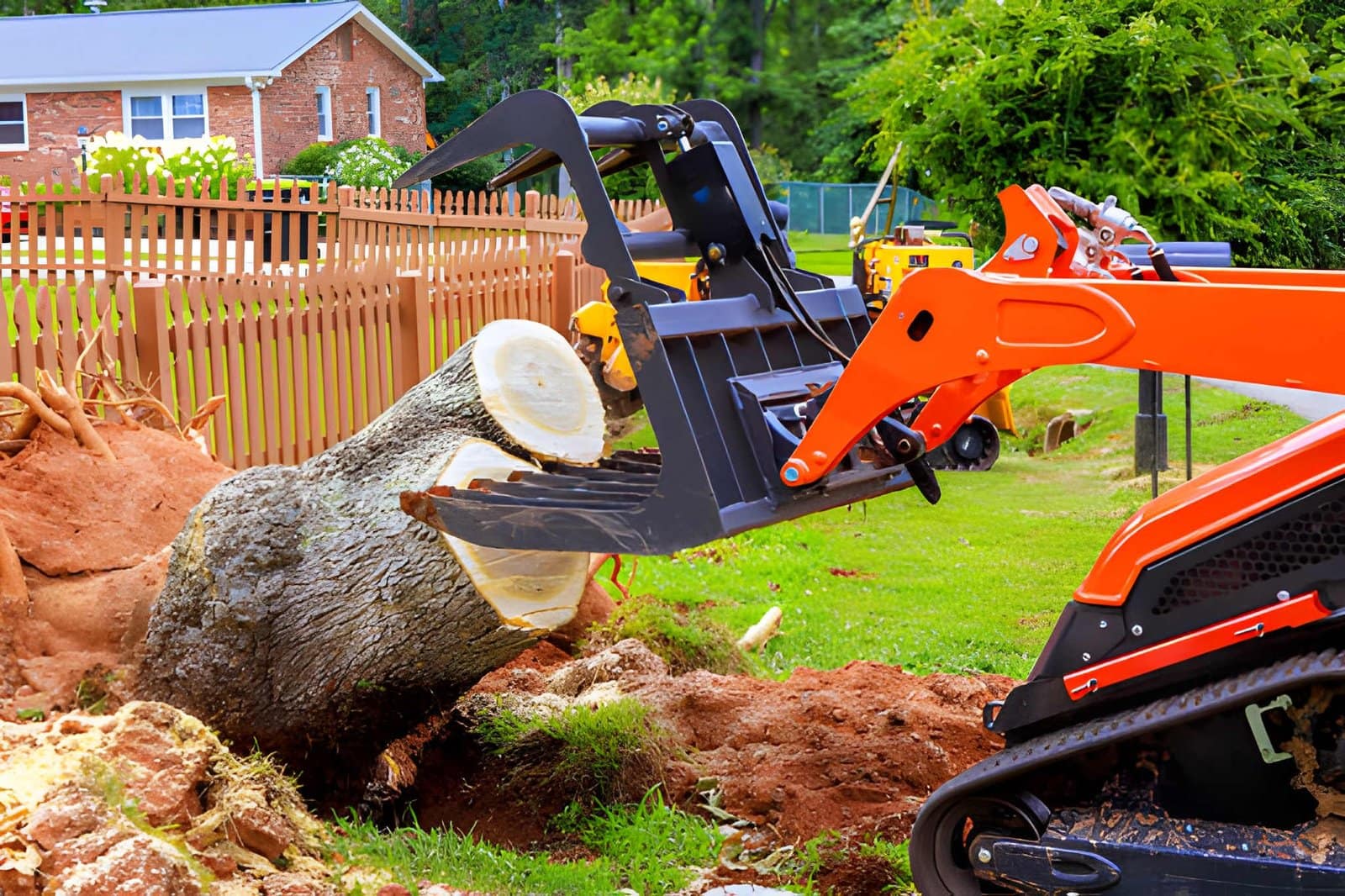
Tree Removal for
Rental Properties
Dead trees, storm-damaged limbs, and root systems threatening infrastructure at occupied properties are a liability you cannot defer. We handle the full removal — sectioning, haul-out, documentation — and close the work order the same day with timestamped photos. Quote within 48 hours. Same-day service available for emergencies.
Why Rental Property Tree Work
Gets Deferred — and Why It Shouldn’t
Across our portfolio work orders, tree removal gets delayed longer than almost any other exterior service. Here is what we see and what the deferral actually costs.
Dead Trees at Occupied Properties Are a Liability
A standing dead tree is a falling object with an unknown timeline. When the property is occupied, that timeline is not your tenant’s problem to manage — it is yours. We prioritize dead tree work orders at occupied single-family and multifamily properties specifically because the liability clock does not pause for vendor scheduling.
Storm Damage: Documentation Before Removal
If a tree falls and damages a structure or vehicle, photos of the damage must be taken before removal begins. We flag storm damage work orders for photo-first protocol. The before images are timestamped and delivered with the after photos the same day — usable for insurance claims and HOA board submissions without additional requests.
Root Systems That Damage Driveways and Irrigation Lines
Root systems from mature trees crack concrete driveways and invade lateral irrigation lines — often silently for 12 to 24 months before the damage becomes visible. Treating the irrigation leak without removing the source means the same line fails again within a season. We address the cause, not just the symptom.
Tree Removal at a Rental Property Is Operationally Different
Homeowner tree removal has one decision-maker, one schedule, and one set of eyes on the property. Tree removal at an occupied rental property has multiple variables that change how a work order needs to be handled — and most solo vendors are not built for any of them.
We handle these constraints as part of the standard work order process, not as exceptions that require manual follow-up from your team. The four scenarios below cover the majority of what changes when a property is occupied versus owner-managed.
Occupied property scheduling
Crew arrival windows are communicated to tenants in advance. We do not show up without notice at a property with residents present. This is standard protocol, not a premium add-on.
Vacant property access coordination
For vacant units or properties in turnover, we coordinate access through your PM workflow — AppFolio lockbox codes, key pickup, or direct PM contact. No need to manage access separately from the work order.
Liability documentation for deferred removals
When a property manager flags a dead or compromised tree that cannot be scheduled immediately, we document the pre-removal condition with photos and timestamps. This creates a defensible record of the property’s known condition at time of submission.
HOA violation response
If the removal is triggered by an HOA notice, the before-and-after photo set is formatted for board submission. We note the original condition and the corrected state with the job close-out date.
When Tree Removal Demand Spikes
Across Our Markets
We operate across 12 U.S. markets with different climates and different seasonal risk windows. Knowing these patterns is how you stay ahead of reactive emergency calls.
Desert markets see significant tree stress and storm damage from the Southwest monsoon. High-wind microbursts can drop mature trees — particularly mesquite, palo verde, and eucalyptus — within hours. Properties with large canopy trees near structures should have a pre-monsoon removal assessment every spring. Peak emergency demand runs July through September.
Peak: July – SeptemberFlorida markets carry the longest elevated-risk window of any market we serve. Hurricane season runs June through November, with peak activity August through October. Pre-storm removal of compromised trees reduces post-storm emergency load significantly. Post-storm documentation is required before any removal begins to preserve insurance claim viability.
Peak: August – OctoberWet snowfall and ice events cause branch failure on broadleaf trees that retain leaves into late fall. Limbs over structures, walkways, and vehicles are the primary risk. Denver properties in particular see split-leader failures in large oak and ash trees during early-season heavy snow events. Pre-winter structural pruning reduces removal volume the following spring.
Peak: November – MarchThe Southeast and Texas markets see concentrated storm activity in spring. Atlanta properties with pine stands are particularly vulnerable — pine trees fail cleanly and at significant height, making them high-priority removal targets after any major storm event. Texas markets see similar demand spikes following hail events that compromise crown structure.
Peak: March – MayWhat Flags a Tree for Removal
in a Well-Managed Portfolio
Proactive removal decisions prevent emergency calls. These are the six conditions we see most often across our portfolio work orders that indicate a removal conversation should happen before the next storm season.
Dead Wood Throughout the Crown
Full crown dieback in a standing tree means the root system is no longer sustaining the structure. The tree will fail; the only variable is timing. At an occupied property, this moves to the front of the removal queue regardless of size or location.
Visible Lean Toward a Structure
A measurable lean toward a roofline, fence line, or vehicle parking area changes the risk profile immediately. Even structurally sound trees with a significant lean pose disproportionate risk in high-wind events across all our markets.
Root Heave at Hardscape
Raised concrete at the base of a tree — driveways, walkways, patios — indicates active root pressure on infrastructure. Left unaddressed, root systems penetrate lateral irrigation lines and crack foundation-adjacent concrete within 18 to 36 months of first visible heave.
Split Leader Structure
A tree with two co-dominant leaders (two main trunks of roughly equal size) creates a structural weakness at the union point. This is most common in maples, Bradford pears, and large shade trees. Split leaders under load — snow, ice, or high wind — separate unpredictably.
Fungal Growth at the Base
Mushroom growth at the base or on the lower trunk indicates internal decay. The visible decay is generally 18 to 24 months ahead of visible crown decline. By the time the crown shows die-back, the structural integrity is already compromised.
Proximity to Power Lines
Trees with branches within 10 feet of utility lines require coordination with the local utility company in most of our markets before removal can begin. We flag permit and coordination requirements at time of quoting so the timeline is accurate from submission.
What Property Managers Say
After Their First Few Jobs
“Working with Breasy has been a game-changer for our properties. Their team is reliable, professional, and consistently goes above and beyond. It is a relief to have a partner we can trust.”
“Breasy provides a fast response to our requests and delivers excellent customer service. We highly recommend this company for great service at a fair cost.”
“Breasy felt like ordering something from Amazon. So easy. I love the photos they send so even when I am out of town, I know they were there.”
Everything Included
in This Service
Every work order is scoped before work begins. No scope creep, no surprise add-ons.
Tree Sectioning and Removal
Full removal in sections using rigging and controlled lowering where proximity to structures requires it. This applies to trees within 10 feet of rooflines, fences, utility connections, and hardscape. Pricing runs $200 to $2,000+ depending on tree size, access constraints, and structural proximity. Most jobs complete within 5 business days; same-day service is available for emergency situations at occupied properties.

Debris Chipping and Haul-Out
All material chipped on-site and hauled from the property in the same visit as removal. The property is left clean — no debris pile for the tenant to photograph and submit as a maintenance complaint. For large multi-tree removals, chip and haul is confirmed in the scope before the quote is approved.

Stump Grinding (Optional Add-On)
Stump ground below grade following removal to eliminate the trip hazard and prepare the area for replanting or turf restoration. Quoted separately by default; combined removal and stump pricing is available and typically reduces total cost versus two separate work orders. Below-grade grinding is the standard — not a surface cut that leaves visible remnants.
View stump grinding →
Before-and-After Photo Documentation
Photos before work begins and after the property is cleared — both timestamped, both delivered same day. For storm damage work orders, the pre-removal photos capture damage to structures or vehicles before the tree is moved. These are formatted for insurance claim submission and HOA board documentation without additional processing on your end. A job cannot be marked complete in our system until the post-completion photos are uploaded.
How completion photos work →What Drives Tree Removal Cost
We quote within 48 hours based on submitted photos and property details. Here is what moves the number.
The $200 to $2,000+ range on tree removal is real — not a vague placeholder. A single 15-foot desert tree in an open Phoenix yard with clear access and no adjacent structures lands at the low end. A 60-foot oak over a roofline in Atlanta requiring rigging, sectioning, ground crew, chip hauling, and stump grinding lands at the high end.
Most single-family rental property tree removals that go through our work order queue fall between $350 and $900 for a single tree with standard debris haul. Adding stump grinding typically adds $150 to $300 depending on stump diameter.
We quote based on photos — a clear photo of the tree from the base to the crown, one photo showing proximity to structures, and one showing street or driveway access covers most quotes without a site visit. Emergency same-day work orders carry a priority premium that is disclosed at quote approval, not after the job closes.
You can also submit tree removal as part of a multi-work-order batch — same property visit, separate line items, single invoice.
Built for Everyone Responsible
for a Property
From portfolio managers with 500 doors to individual homeowners. The process, documentation standard, and quote turnaround are the same regardless of portfolio size.
Property Managers
Submit from AppFolio, Buildium, RentVine, or email. Quotes in 48 hours. Completion photos same day. Single point of contact across every market we serve.
Learn more →Real Estate Investors
Submit the work order, approve the quote, receive photos proving completion. For single-family rental portfolios spread across multiple markets, one contact handles every property.
Learn more →Homeowners
Individual homeowners submit work orders the same way. Market-rate pricing, before-and-after photos, invoice on confirmed completion — not before.
Learn more →Tenants and Residents
Flag a maintenance issue directly. Your property manager submits the work order. We communicate arrival windows, complete the job, and close with photos.
Learn more →How Tree Removal Works:
Work Order to Cleared Property
No vendor coordination, no follow-up calls, no wondering whether anyone showed up.
Submit, Get a Quote, Approve
Send the work order from AppFolio, Buildium, RentVine, or directly by email with photos of the tree. Include one photo from the base showing trunk diameter, one showing crown height, and one showing proximity to any structure or driveway. That is enough to quote most jobs without a site visit.
Within 48 hours you receive a scoped, market-rate quote. Approve it and the job is scheduled. The 48-hour quote turnaround applies to all work orders including emergency flagged submissions.
Dispatched, Completed, Documented
Our routing system assigns the nearest available provider based on location, job type, and equipment requirements. For occupied properties, the tenant receives a window notification before arrival. For storm damage work orders, the provider photographs pre-existing damage to structures before any removal begins.
Most jobs complete within 5 business days. Same-day service is available for emergency flagged work orders. If a dispatched provider fails to arrive within the scheduled window, the work order is re-dispatched automatically.
Photos and Invoice, Same Day
The day work is completed, you receive timestamped before-and-after photos and an invoice. The invoice is triggered by confirmed photo upload — not by a provider self-reporting completion. Payment is due after confirmed completion. Not before work begins.
For insurance or HOA documentation needs, the photo set is delivered in the same email as the invoice, ready to forward without additional requests.
We Complete Every Job to the Scope Agreed
If something is not right when we close a work order, we make it right before the invoice goes out. That is not a policy statement. It is how our documentation review works operationally: every job requires uploaded before-and-after photos that match the scoped work before the work order can close.
“Being able to hand off a work order and trust that everything will be professionally managed from start to finish has made a meaningful difference in our day-to-day workload.”Kara Ludwig — Senior Property Manager, Real Estate Brokers of Arizona
Breasy vs. Managing
Vendors Yourself
Most property managers already know the problems. Here is what the difference looks like when a tree removal work order hits your queue.
| Breasy | Solo Vendor | Marketplace | |
|---|---|---|---|
| Quote turnaround | ✓ Within 48 hours, photo-based | 2 to 5+ days; site visit often required | Varies by vendor response |
| Same-day emergency service | ✓ Available for occupied properties | ✕ Rarely offered | ● Premium cost, not guaranteed |
| Before-and-after photos | ✓ Required — job cannot close without them | ✕ Rarely provided | ● Depends on vendor |
| Storm damage documentation | ✓ Pre-removal photos before any tree is touched | ✕ Not standard protocol | ✕ Not included |
| Re-dispatch on no-show | ✓ Automatic — no follow-up call from you | ✕ You reschedule manually | ✕ Platform not accountable |
| HOA documentation | ✓ Photo set formatted for board submission | ✕ Not standard | ✕ Not included |
| Portfolio coordination | ✓ Single point of contact across all markets | ✕ Per-property relationship | ✕ Separate vendors per job |
| Same-day invoice | ✓ Delivered with completion photos | ✕ Often delayed or inconsistent | ● Varies |
| Submit a Work Order → |
Straight From the Property Managers
Who Use Us Every Week
“They are amazing. Quick and efficient. Great job and amazing to work with.”
“Breasy is fairly priced and reasonable. They work with all budgets and are a reliable service.”
“Being able to hand off a work order and trust that everything will be professionally managed from start to finish has made a meaningful difference in our day-to-day workload. The detailed reporting they provide has been incredibly valuable when communicating with owners.”
Works With Your Existing Property Management System
Submit work orders from whatever platform you already use. No new software, no new logins, no workflow changes on your end.










Tree Removal: Frequently Asked Questions
Is same-day emergency tree removal available?
How quickly can you respond to storm damage?
Is stump grinding included in the removal price?
What documentation do you provide for insurance claims?
How long does a typical tree removal take?
Do you handle permit requirements?
What happens if the provider doesn’t show?
Serving 12 U.S. Markets
and Growing
We operate across Arizona, Texas, Florida, Georgia, Nevada, Colorado, and Washington — each with market-specific seasonal demand patterns for tree removal.
Tucson, AZ
Arizona
Dallas, TX
Texas
Austin, TX
Texas
San Antonio, TX
Texas
Houston, TX
Texas
Orlando, FL
Florida
Tampa, FL
Florida
Jacksonville, FL
Florida
Atlanta, GA
Georgia
Las Vegas, NV
Nevada
Denver, CO
Colorado
Tree Removal Service
Down Safe, Gone Clean, Documented Same Day
Submit the work order with photos of the tree. We scope, quote within 48 hours, dispatch to the nearest available provider, and deliver before-and-after photos the day the job closes. If the provider does not show, we re-dispatch. You pay after confirmed completion.

