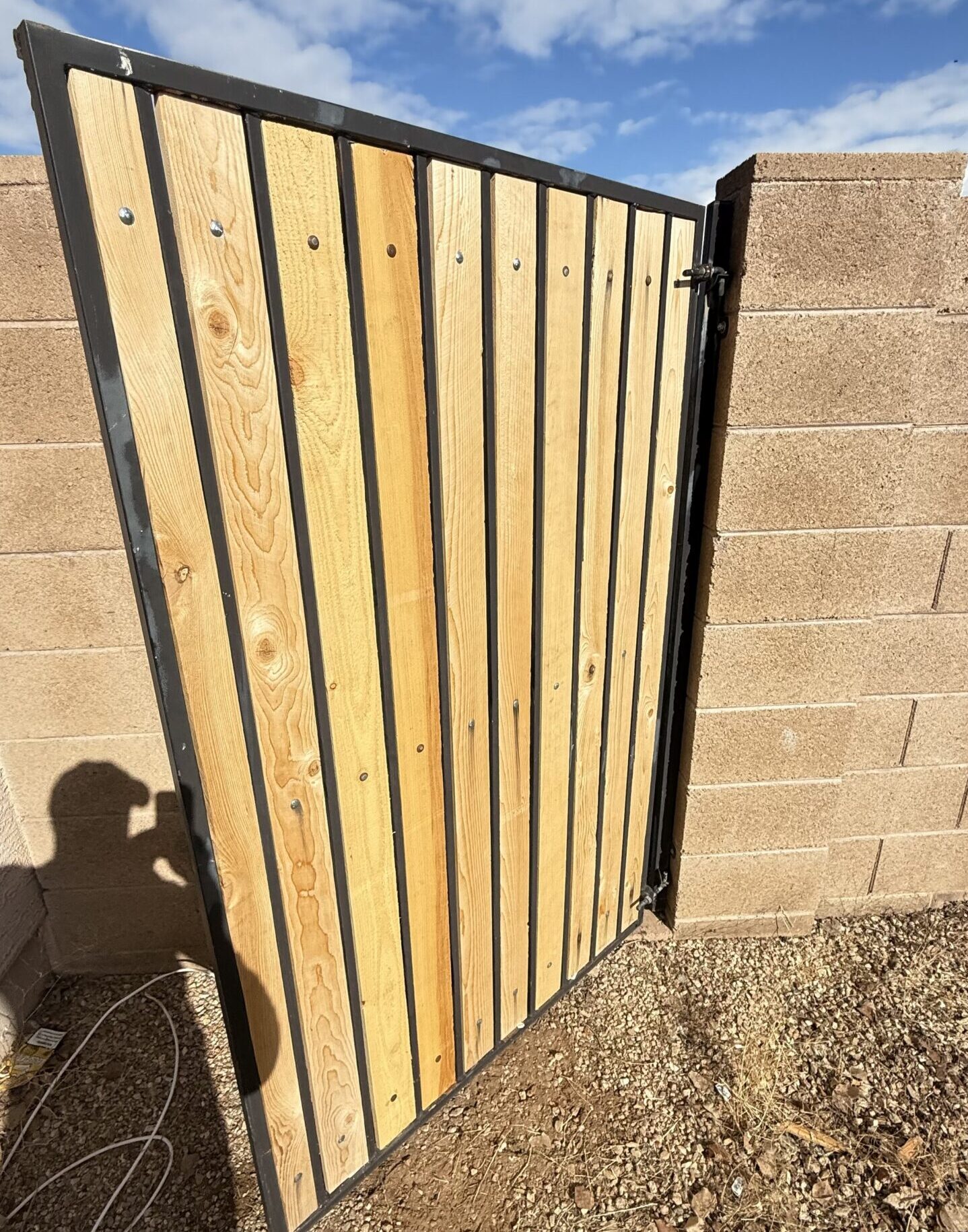
After a tenant moves out, spring yard cleanup covers six exterior areas: lawn condition, tree and shrub overgrowth, gutters and drainage, fence and walkway integrity, irrigation system function, and exterior lighting.
We quote the full scope within 48 hours and complete it before re-listing so the vacant period doesn’t result in HOA violations or deter prospective tenants.
Schedule spring cleanup for your properties today.
Request a Call Back ›This spring yard cleanup checklist is built for property managers and investors coordinating across multiple properties. Each section maps to a work order category.
The goal isn’t a tidy yard for its own sake. It’s a clean handoff between tenancies, documented with before-and-after photos, completed within the vacancy window.
Key Insights
- A single 30-day vacancy can produce three separate HOA citation notices if exterior cleanup is not dispatched immediately after move-out
- Seasonal restoration (pruning, aeration, irrigation repair) is almost never chargeable to a departing tenant under standard lease language
- Phoenix and Tucson have a pre-emergent treatment deadline in late February and missing it means managing weeds for the entire warm season
- Gutter clearing takes less than two hours per property and prevents water damage remediation that runs into thousands
- Batch submission across a portfolio eliminates per-property coordination overhead with no trade-off on documentation quality
Why the Move-Out Window Is the Highest-Risk Period for Exterior Condition #
Most exterior deterioration happens slowly. Overgrowth, drainage issues, and fence rot don’t appear overnight. But the move-out window compresses all of it into a visibility problem at exactly the wrong time.
Once a tenant vacates, no one is on the ground to flag a clogged gutter, report overgrowth past the fence line, or notice that the sprinkler heads stopped working in February.
A property that looked fine during the last walkthrough can come back as three HOA notices and a dead lawn by the time you’re preparing to re-list six weeks later.
HOA Violation Risk During the Vacant Period #
HOA enforcement doesn’t pause during a tenancy transition. In many of our active markets, including Phoenix, Dallas, and Tampa, HOAs issue citation notices regardless of occupancy status.
Grass height over the threshold, dead plant material in visible beds, and debris on walkways: each triggers a fine that accrues during the vacancy.
We’ve seen portfolios where a single 30-day vacancy produced three separate HOA notices because no one dispatched exterior cleanup between tenants.
That’s a recoverable problem, but it’s also entirely preventable. Our HOA violation cleanup service is specifically designed to resolve outstanding issues before a new tenant takes possession.
Compliance Risk
HOA enforcement does not pause during a tenancy transition. A single 30-day vacancy can produce multiple citation notices across grass height, overgrowth, and debris violations before anyone schedules exterior cleanup. Each fine accrues regardless of occupancy status.
How Exterior Neglect Slows Re-Listing #
First impressions at a rental property are set before a prospective tenant walks through the door. A dead lawn, uncleared debris, or visibly broken fence read as deferred maintenance signals, and they affect application quality, not just traffic volume.
Properties listed with a clean exterior presentation attract faster applications in our markets. Every additional vacancy day has a direct revenue cost. Completing spring cleanup within the first week of a move-out shortens that window.
Landlord vs. Tenant Responsibility for Spring Yard Cleanup #
This is the question most property managers resolve incorrectly until a security deposit dispute forces a closer read of the lease.
What Lease Language Typically Covers #
Most standard lease agreements place routine lawn maintenance on the tenant for the duration of occupancy. That includes mowing, basic weeding, and keeping the yard free of trash and debris.
Pruning, irrigation repair, gutter clearing, and structural fence work almost always fall outside what a tenant is expected to handle.
What Falls Back on the Property Manager at Move-Out #
At move-out, the responsibility calculus shifts. A tenant who maintained a lawn reasonably but didn’t aerate, fertilize, or address winter dormancy damage hasn’t violated the lease. The property manager owns that restoration cost.
Spring move-outs expose this most sharply since the growth season arrives before a new tenant moves in, while the departing tenant held no obligation for seasonal restoration beyond routine mowing.
Our move-out inspection documents the exterior condition at key return with timestamped photos, giving you a defensible baseline before any cleanup work begins. That documentation matters when security deposit disputes involve exterior conditions.
Important
Seasonal restoration (aeration, fertilization, pruning, and irrigation repair) is not a tenant obligation under most standard leases. Withholding from a security deposit without explicit lease language covering seasonal maintenance creates a dispute you are unlikely to win. Document exterior condition at key return before any cleanup begins.
Lawn and Grass Care #
Dead patches, matted winter growth, and bare spots from heavy foot traffic are the most common lawn conditions we find at spring move-outs.
What we look for:
- Clear all dead material and debris from the surface before any other work
- Rake or dethatch matted turf to allow air and moisture to reach the root layer
- Identify bare patches and flag for reseeding or sod repair
- Apply pre-emergent treatment before soil temperature crosses 55°F to stop crabgrass and broadleaf weeds before they establish
- First mow at a higher setting to avoid scalping stressed grass: target 3 to 3.5 inches on cool-season turf and 2 to 2.5 inches on warm-season turf
In Phoenix, Tucson, and Las Vegas, warm-season grasses like Bermuda and Zoysia green up fast in March and April. Missing the first fertilization window sets the lawn back for the entire warm season. We schedule landscape cleanup work to hit that window, not to respond to it after the fact.
Trees and Shrub Pruning #
Unpruned trees at a move-out property carry two risks: HOA citation for overgrowth and structural risk from dead or overhanging branches.
What to check:
- Remove all dead, crossing, or structurally compromised branches: prioritize any limbs over a walkway, driveway, or HVAC unit
- Prune shrubs that have grown past fence lines, window clearance, or sidewalk setbacks
- Clear any low-hanging canopy that would obstruct a walkthrough or exterior photo
- Check for root intrusion near driveways, walkways, and foundation edges
Spring is the correct window for most pruning work. Cuts heal faster as the plant enters active growth, and visibility on branch structure is clearest before full leaf-out. Waiting until summer means pruning into heat stress conditions, which slows recovery.
For larger removals or storm-damaged trees, tree pruning through Breasy includes permitting requirements and stump disposition as part of the scope.
Gutter and Downspout Clearing #
Gutters blocked with winter debris are a silent water damage risk. A spring rainstorm after a long vacancy can overflow a clogged gutter onto a fascia board, into a soffit, or against a foundation in hours.
Standard scope:
- Clear all debris from gutter channels and flush downspouts with water to confirm flow
- Check downspout extensions are directing water at least 3 feet from the foundation
- Inspect for sagging sections, separated joints, or visible rust damage
- In markets with significant tree canopy (Atlanta, Seattle, Jacksonville), expect heavier debris volume from fall and winter accumulation
This is a job that takes less than two hours on most single-family properties and prevents remediation costs that run into thousands. We include gutter inspection in our standard pre-listing exterior scope. Standalone gutter cleaning work orders come back with a quote before end of business.
Key Takeaway
Gutter clearing takes less than two hours on most single-family properties. A blocked gutter during a spring rainstorm can push water into a soffit or foundation in hours, remediation runs into thousands.
Fence and Walkway Inspection #
Fences and walkways deteriorate gradually. At move-out, the question isn’t whether they look fine. It’s whether they’ll hold through the next tenancy, and whether their current condition is HOA-compliant.
What to walk:
- Walk the full fence perimeter: check posts for ground-level rot, boards for splitting or separation, and gate hardware for function
- Look for lean on any fence section, which indicates post failure below grade
- Inspect walkways and patios for heaved or cracked sections, particularly near tree roots or areas with drainage pooling
- Clear moss, algae, or accumulated debris from walkway surfaces before pressure washing
- Flag any section that is a tenant safety issue: a broken gate latch, a loose board, a cracked step
Breasy handles board replacement, post stabilization, and gate rehang through a single fence repair work order, not separate dispatch calls.
Irrigation System Check #
An irrigation system that was running on the tenant’s schedule may have been running incorrectly for months. Broken heads, clogged zones, and incorrect timers are standard findings when we start a new property on service.
What to address:
- Run each zone manually and observe all heads for spray coverage, rotation, and pressure
- Check for broken or sunken heads: both are invisible until a zone is activated
- Confirm timer settings are reset for current evapotranspiration rates, not the schedule from last summer
- Inspect main valve and backflow preventer for winter damage in markets where freeze events are possible
- Look for signs of irrigation pooling near the foundation or running onto sidewalks and streets
In Phoenix and Dallas, we see two consistent patterns at spring move-outs: heads broken by foot traffic or mowing equipment during the tenancy and timers still running on summer schedules that are already past season-appropriate. Neither issue is the tenant’s fault. Both cost money in wasted water or dead plant material if left unaddressed.
Key Insight
Managing spring cleanup property-by-property means submitting 20 separate requests, chasing 20 separate quotes, and tracking 20 separate completion timelines. Batch submission eliminates that overhead without reducing documentation quality. Every property still gets its own before-and-after photos and quote approval.
Our irrigation repair work orders include zone-by-zone documentation with photos of any heads replaced or adjusted.
Exterior Lighting Check #
Exterior lighting is the item most often skipped at move-out and most likely to trigger a safety complaint from a new tenant in the first week of occupancy.
What to address:
- Test all exterior fixtures at dusk or with a hand test: front entry, garage, side entries, rear access points
- Replace burned bulbs and check fixture seals: moisture intrusion causes repeat failures
- Confirm motion-sensor fixtures are triggering correctly, and coverage zones haven’t shifted
- Check path lighting and any timer-controlled landscape lighting for function
A new tenant who moves in after dark and can’t see the front path or back gate is going to submit a work order by the end of day one. Addressing this during the move-out scope prevents that call.
Spring Yard Cleanup Checklist: Six Categories
- ✓ Lawn and grass care: dead material, dethatching, pre-emergent timing
- ✓ Trees and shrub pruning: dead branch removal, overgrowth, canopy clearance
- ✓ Gutters and downspouts: debris clearance, downspout flow, structural inspection
- ✓ Fence and walkway inspection: rot, lean, heave, HOA compliance
- ✓ Irrigation system check: zone testing, broken heads, timer reset
- ✓ Exterior lighting: fixture test, bulb replacement, motion sensor check
Those six categories cover the full exterior scope. Where the specific tasks fall within that scope, and how much flexibility you have to complete them, depends on whether the property is occupied or vacant when the work happens.
Occupied vs. Vacant Property: Where the Scope Differs #
Spring yard cleanup at an occupied property is a coordination exercise. You’re scheduling around a resident’s schedule, respecting notice requirements, and limiting disruption.
At a vacant property, the scope expands and the timeline compresses.
| Factor | Occupied Property | Vacant Property |
| Access coordination | Requires tenant notice | Immediate scheduling |
| Work hours | Constrained by tenant availability | Full workday flexibility |
| Scope depth | Reactive and surface-level | Full restoration and documentation |
| Photo documentation | The tenant presents to flag issues | Full before-and-after capture |
| HOA risk window | No visibility without a scheduled visit | No visibility without scheduled visit |
| Irrigation scheduling | May conflict with tenant habits | A full reset appropriate |
The vacant window is the right time to do the work that can’t be done during an active tenancy. That means full irrigation zone testing, complete pruning, walkway pressure washing, and gutter clearing without working around a resident’s schedule.
We treat spring move-out cleanup as a distinct work order category—different scope, different depth, and different documentation requirements than occupied maintenance.
Scope and access aren’t the only variables. When the work needs to happen, it shifts by market, and in most of our active markets, the window is earlier and tighter than most property managers expect.
Spring Cleanup Timing Across Our Markets #
Our markets don’t follow the same seasonal calendar. The “spring cleanup” frame that most content assumes is built for the northeast, where frozen ground and late snowmelt set the starting line. In our active markets, the triggers are different. For warm-climate markets, the window closes faster.
| Market | Cleanup Window | Key Timing Pressure |
| Phoenix and Tucson (AZ) | February through April | Pre-emergent deadline late February; 95°F+ by May limits outdoor scheduling |
| Las Vegas (NV) | March through April | Bermuda green-up in March; summer heat compresses tree work window |
| Dallas, San Antonio, and Austin (TX) | March | Spring storms drive debris volume; overgrowth citations accelerate by April |
| Atlanta (GA) | March through April | Pine pollen season (Feb–April) accelerates gutter clogging and walkway hazards |
| Jacksonville, Tampa, and Orlando (FL) | April through May | No spring dormancy; hurricane season prep window closes June 1 |
| Seattle (WA) and Denver (CO) | March through May | Denver hail season starts May; tree and gutter work urgent before storm risk |
How We Handle Spring Cleanup Across a Portfolio #
For a property manager with 20 or 50 properties, spring cleanup isn’t a single job. It’s a sequencing problem.
The mistake most coordinators make is treating each property as a separate dispatch event: submitting individual requests, chasing separate quotes, and managing follow-up across multiple timelines. That approach works for one property. It breaks at five.
Our process for portfolio spring cleanup:
- Submit work orders for all properties requiring spring cleanup as a batch
- Each property is routed to Breasy’s operation in that market
- Quotes return within 48 hours per property
- Approval triggers scheduling across all properties simultaneously
- Each job is completed within five business days of approval
- Same-day completion photos are delivered per property, not per batch
Every job in the batch has its own photo documentation: before and after, per task category. That documentation serves double duty: it protects against security deposit disputes and gives you a visual condition baseline for the new tenancy.
For property managers running more than ten units, we set up a standing spring cleanup workflow in March, so it runs without you needing to initiate it each year.
Ready to schedule your spring move-out cleanup? Request a call back, and we’ll walk through your property list.
Ready to schedule spring cleanup across your portfolio?
Submit your property list. Quotes return within 48 hours. Every job completed and documented within five business days.
Request a Call BackFrequently Asked Questions #
Can spring yard cleanup costs be deducted from a tenant’s security deposit? #
Only if the lease explicitly requires seasonal maintenance beyond routine mowing and the tenant demonstrably failed to meet that standard. In most cases, spring restoration (aeration, fertilization, pruning, and irrigation repair) falls to the property owner. Document the exterior condition at key return before starting any cleanup work; that record is your only protection if a dispute arises.
How long does spring yard cleanup take at a rental property? #
Most single-family properties complete in one to three days for full exterior scope. Lawn work, gutter clearing, and lighting checks typically finish in a half-day. Tree pruning and irrigation zone testing add time depending on property size and system complexity. We complete all work within five business days of quote approval.
What happens if exterior cleanup is skipped before re-listing? #
Vacant properties in active HOA communities risk citation notices within days of a tenant vacating. Overdue exterior condition also extends vacancy by slowing application quality and volume. The combined cost of skipped cleanup (fines plus extended vacancy days) consistently exceeds the cost of the work itself.
How do property managers coordinate spring cleanup across 20 or more properties? #
Submit as a batch work order. We route, quote, schedule, and document all properties in a single workflow. You approve quotes per property and receive completion photos for each. Managing 20 properties individually multiplies the coordination burden with no operational advantage.
What does spring yard cleanup typically cost for a single-family rental? #
Cost varies by property size, scope depth, and market. Lawn work and lighting checks are the fastest and least expensive components. Tree pruning, irrigation zone testing, and fence repair drive costs up, particularly on properties with deferred maintenance. We quote each property individually; most quotes return within 48 hours of submission.