Landscaping decisions on rental properties come down to one question: Does this spend reduce vacancy, protect rent levels, or lower your maintenance cost over time? If the answer is no to all three, it’s decorative spending. For property managers and investors running portfolios across multiple markets, the line between smart exterior investment and expensive tenant indifference is clearer than most landscaping guides acknowledge.
The Core Question: What Do Tenants Actually Notice? #
What Registers at Showings #
Tenants form a first impression before they walk through the door. That impression is driven by three things: whether the lawn is mowed, whether there is no trash or debris, and whether the entry path is clear and clean.
That’s it. In 100,000+ jobs we’ve completed across markets like Phoenix, Atlanta, Dallas, and Jacksonville, the most consistent feedback from property managers isn’t about plant selection or hardscape design. It’s about the condition at move-in. A clean property, edged, and free of dead vegetation rents faster than one with expensive landscaping that looks neglected.
The standard that matters: mowed, edged, debris-clear, no dead plants visible from the street. Every dollar spent beyond that needs a specific justification tied to your market and property type.
What Tenants Ignore No Matter How Nice It Is #
Perennial garden beds. Decorative mulch color. Specialty plants. Seasonal color rotations. Water features.
These elements cost real money to install and maintain. They also create liability: speciality plants require specific care, water features need chemical management, and seasonal annuals require quarterly replacement. None of them influences lease signing rates in single-family rental properties in any of the markets we serve.
A Dallas investor who upgraded three properties with designer drought-tolerant beds saw no change in days on market compared to comparable properties with standard St. Augustine grass and basic edging. The beds looked better. The lease timelines were identical.
What Actually Increases Rent vs What Only Increases Sale Value #
These landscaping investments consistently support rent premiums or reduce vacancy duration in our markets:
| Improvement | Why It Works for Rentals |
|---|---|
| Drip irrigation system | Reduces tenant complaints, keeps lawn alive through tenant transitions |
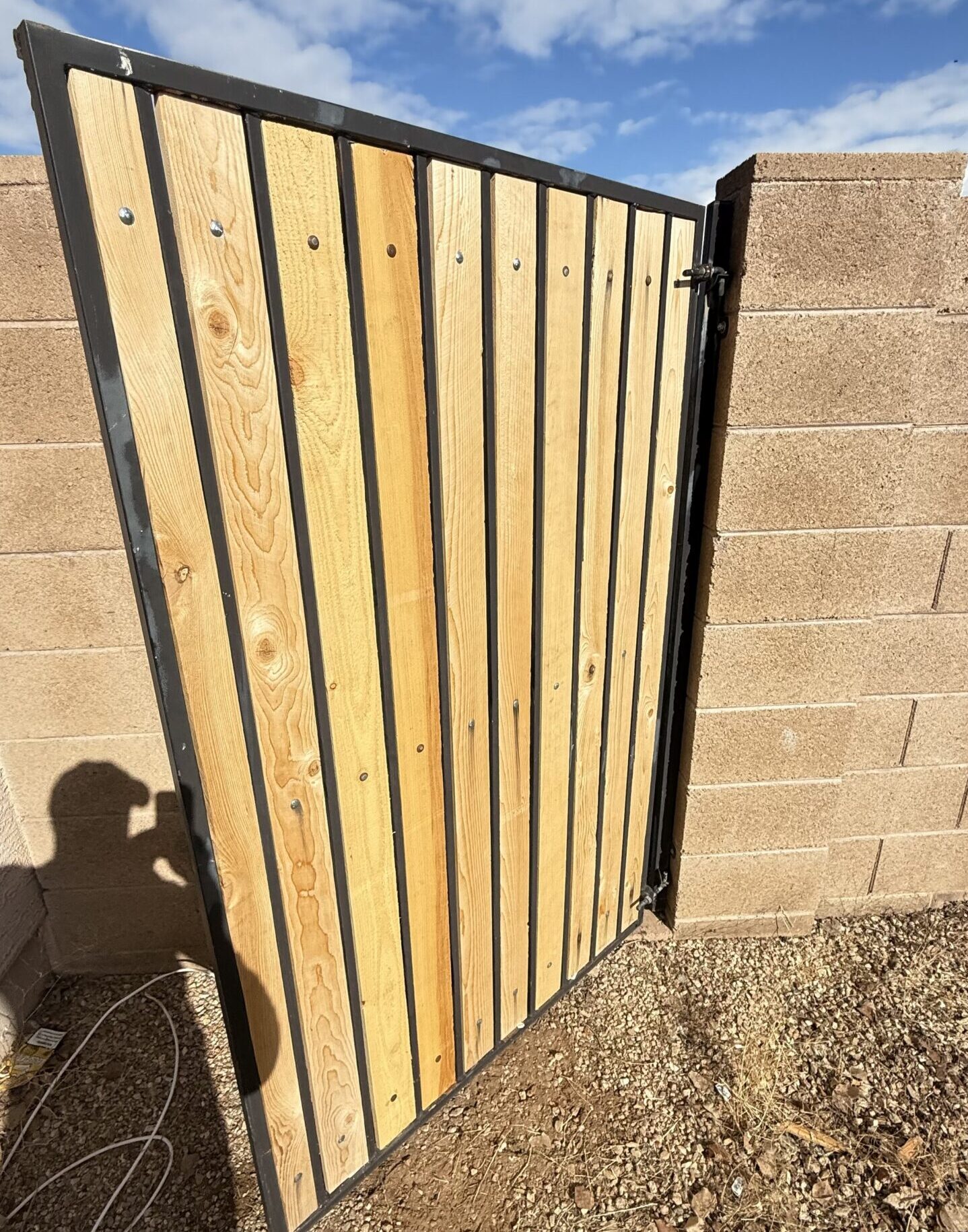
| Hardscaping (concrete paths, paver patios) | Durable, low-maintenance, no mowing required |
| Privacy fencing | High tenant demand in urban SFR markets like Atlanta and Dallas |
| Shade trees (established) | Reduces cooling costs, strong tenant preference in Phoenix and Las Vegas |
| Clean, consistent lawn coverage | Baseline expectation in every market |
Drip irrigation deserves specific mention. In Phoenix and Las Vegas, properties without irrigation systems almost always develop dead-lawn complaints within 60 days of occupancy. The tenant waters inconsistently, the lawn dies, you receive an HOA violation, and you’re paying for a landscaping cleanup that costs more than the irrigation install would have.
We provide quotes for drip irrigation installations and irrigation repairs within 48 hours across all our markets. Across our Phoenix portfolio, the most common reactive call is for a lawn that died due to the lack of an irrigation system.
Projects That Only Pay Off at Resale #
These are valid investments if you’re planning a sale within 18–24 months. For a long-term rental, they generate maintenance costs without rental return:
- Decorative stone and pebble features
- Custom retaining walls beyond grade control necessity
- Ornamental trees that require specialist trimming
- Sod upgrades from functional grass to premium varieties (Bermuda to Zoysia, for example)
- Outdoor lighting beyond basic security/pathway coverage
If you’re holding the property for 5+ years as a rental, invest in irrigation infrastructure and hardscaping. If you’re preparing to sell, invest in curb appeal enhancements. The decision should follow the timeline, not aesthetic preference.
Low-Maintenance Landscaping Standards That Work Across Markets #
Phoenix and Las Vegas: Desert Conditions #
Both markets have HOA water restriction rules that change seasonally. Caliche soil is common in Phoenix, meaning deep plant installation requires soil amendment. Grass lawns in Las Vegas are being actively removed under water conservation incentives. Las Vegas lawn removal programs have accelerated this shift significantly.
Standard we recommend: gravel or decomposed granite ground cover, drought-tolerant native plants (desert willow, palo verde, lantana), timer-controlled drip irrigation, and no turf in front yards, where HOA rules permit removal. Maintenance frequency drops to 4–6 visits per year once established. Compare that to 26+ mow visits for a grass lawn at Phoenix summer growth rates.
Dallas and Atlanta: Heat Plus Clay Soil #
In Dallas and Atlanta, clay soil creates drainage problems that kill plants without warning. In our Dallas exterior maintenance work and Atlanta properties, the most common landscaping failure is plants drowning in standing water after rain, or root systems failing in summer heat because clay compaction prevents deep root growth.
Standard we recommend: Bermuda grass for Dallas (drought-tolerant once established and high-heat tolerant), fescue blends in Atlanta for shaded properties, and raised planting beds with amended soil if flowering plants are required. Avoid boxwoods and junipers as primary shrubs. Both rot quickly in standing water.
Tampa and Jacksonville: Year-Round Growth #
Humidity and warm temperatures mean lawns in Tampa and Jacksonville grow year-round. A 26-mow schedule that works in Denver becomes 40+ mows in Jacksonville. This matters significantly for property management landscaping budgets.
Standard we recommend: St. Augustine grass (heat- and humidity-tolerant, spreads to fill gaps), minimal ornamental beds (mulch breaks down quickly in humidity), and a monthly mowing schedule built into lease terms. Property management landscaping in Tampa requires active scheduling, not reactive response.
Denver and Seattle: Seasonal Dormancy #
Denver properties need winterization of irrigation systems before the first freeze, typically mid-October. Denver landscaping has a compressed active season: heavy growth from April through August, then a sharp falloff. Seattle properties deal with the opposite problem: moss, mold, and persistent moisture through a 9-month wet season.
Standard we recommend: Denver gets bluegrass or fescue (cold-hardy), with irrigation blowout scheduled in autumn as a fixed cost, and spring cleanup coordinated with snowmelt. Seattle exterior maintenance requires moss treatment, gutter priority in the wet season, and ground cover that drains.
What to Avoid: Landscaping Choices That Cost More Than They Return #
High-Maintenance Plants Under Tenant Use #
Roses, lavender borders, vegetable gardens, and anything requiring deadheading or seasonal pruning create ongoing maintenance obligations that tenants don’t fulfil. When you hand a property with a rose garden to a tenant, you’re accepting responsibility for what happens to it. Most tenants won’t prune. Most won’t water correctly. You’ll arrive at move-out with a dead or overgrown feature that costs $300–$600 to remediate.
The threshold: if it requires more than twice-per-year care beyond mowing and edging, it doesn’t belong in a rental property’s front yard.
Water Features and Specialty Installs #
Fountains, ponds, and decorative water features require algae treatment, pump maintenance, and winterization in northern markets. In markets with standing water, they become breeding grounds for mosquitoes. In Phoenix and Las Vegas, evaporation losses make them expensive to maintain in the summer heat.
We’ve removed water features from three properties on request in the past year. Every time, the owner’s explanation was the same: installation was a previous owner’s decision, and the ongoing cost made no sense for rental use.
Seasonal Annuals #
Planting seasonal annuals (petunias, marigolds, pansies) requires replacement every 3–4 weeks. Annual spend for a modest bed ranges from $200–$500 per property, depending on the market. The visual payoff at showing lasts approximately 8–10 weeks before the plants cycle out.
Replace annual beds with low-growing native perennials or ornamental grasses. One installation, no seasonal replacement, minimal watering.
Portfolio-Scale Thinking: Standardizing Across Multiple Properties #
If you manage 10+ properties in a single market, every deviation from a landscape standard costs money. Different plant types mean different vendor knowledge requirements, different irrigation setups mean different service needs and different ground cover materials mean different cleanup costs at turnover.
Why Consistency Reduces Vendor Spend #
When we service a portfolio with a consistent exterior standard, we can route vendors across multiple properties in a single dispatch. A crew that handles 4 properties in a Dallas neighborhood in one day costs significantly less per property than 4 separate vendor calls. That routing efficiency is only possible when properties have the same requirements.
The math: a property manager standardizing on Bermuda grass, drip irrigation, and gravel borders across 15 Dallas properties can schedule a single monthly vendor rotation. Without standardization, you’re coordinating 15 individual service agreements. That’s vendor management overhead that adds up in time and cost.
How to Establish a Per-Property Exterior Standard #
Set a one-page exterior spec per market that covers: ground cover type, approved plant list (3–5 species maximum), irrigation type, and mow frequency. New acquisitions get upgraded to that standard at the first turnover. Existing properties get transitioned during the next scheduled cleanup.
We help property managers document this during onboarding. It feeds directly into how we quote and schedule recurring work.
Who Should Handle Landscaping: Tenant, Landlord, or Managed Provider? #
What to Specify in the Lease #
Lease language regarding landscaping is often so vague as to be useless. “Tenant shall maintain yard in good condition” creates disputes at move-out when there’s no baseline documented.
Better lease language specifies: mowing frequency (every 14 days from April through October, or market equivalent), responsibility for watering, prohibition on planting or removing plants, and photo documentation at move-in. If your lease doesn’t specify mowing frequency by market season, you don’t have an enforceable landscaping clause.
Pair lease language with move-in photo documentation so the baseline condition is never disputed.
When Managed Maintenance Makes Financial Sense #
Tenant-responsible landscaping works for single-family rentals with tenants who genuinely want to maintain the yard. It breaks down at scale, in markets with HOA enforcement, and with short-term or transitional tenancies.
Managed maintenance makes financial sense when any of the following apply: HOA with active enforcement, property in a market with extreme seasonal demand (Phoenix monsoon season, Denver freeze-thaw window), portfolio of 5+ properties where consistent presentation affects brand, or turnover rate above 25% annually (meaning the yard regularly goes unmanaged during vacancy).
We provide recurring landscaping maintenance across all 12 markets, with quotes returned within 48 hours and completion photos on every job. For property managers overseeing HOA-governed properties in Phoenix, Las Vegas, or Atlanta, managed maintenance is usually the lower-risk option, financially, when you factor in violation remediation costs.
Ready to standardize your exterior maintenance across markets? Request a call back, and we’ll put together a per-property quote within 48 hours.
Frequently Asked Questions #
Does landscaping actually affect tenant retention? Condition at move-in matters more than landscape quality. A clean, functional yard reduces early complaints and sets a maintenance expectation. Tenants don’t stay or leave over ornamental plants, but they do escalate complaints about dead lawns, overgrown beds, and HOA violation notices that follow from deferred maintenance.
Should tenants be responsible for lawn care in single-family rentals? In markets with mild year-round growth and low HOA density, tenant-responsible lawns work with clear lease terms and move-in documentation. In HOA-governed communities in Phoenix, Las Vegas, or Atlanta, managed maintenance is lower risk. The HOA violation cost typically exceeds the cost of managed maintenance.
What’s the most cost-effective landscaping upgrade for a rental property? Drip irrigation in arid markets and hardscaping (concrete paths, paver patios) in all markets. Both reduce ongoing maintenance costs and lower tenant complaint frequency. Neither requires seasonal upkeep.
How often should landscaping be serviced on a vacant rental property? Every 14–21 days minimum in high-growth markets (Tampa, Jacksonville, Atlanta). Every 30 days in arid markets (Phoenix, Las Vegas) with established drought-tolerant plants. Vacancy is when HOA violations accumulate fastest because no tenant is present to flag deterioration.
What’s the difference between a managed maintenance provider and a local landscaping vendor? A local vendor quotes and completes individual jobs. A managed provider like Breasy coordinates across your portfolio, routes efficiently, returns quotes within 24-48 hours, and sends completion photos on every job. For investors with 5+ properties, the difference in coordination overhead is significant.