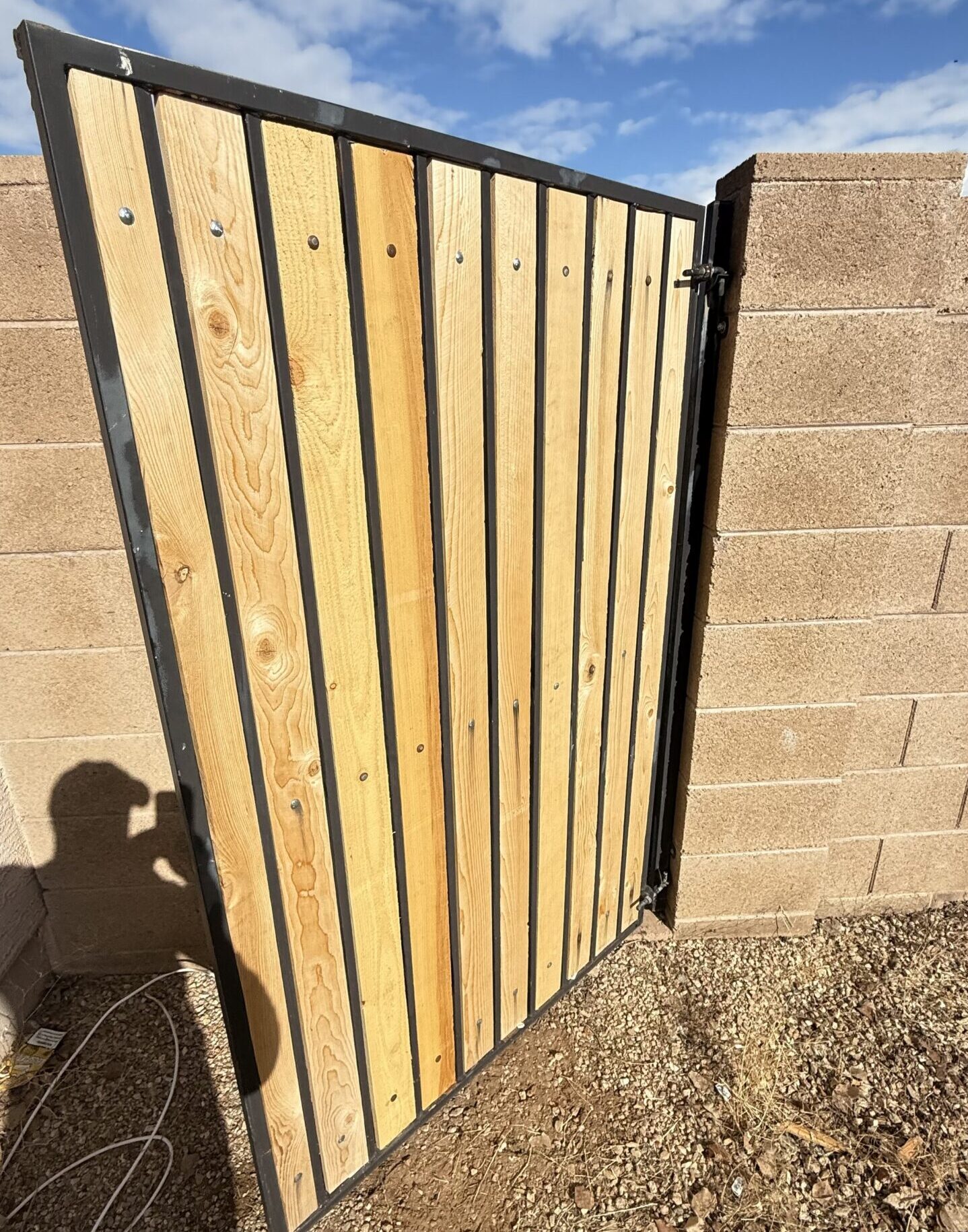
Residential property maintenance covers all routine and reactive services that keep single-family rental properties safe, functional, and tenant-ready. This includes landscaping, irrigation, handyman repairs, exterior upkeep, and turnover preparation.
Last quarter, Breasy completed 8,400 landscape visits across 12 markets. The number one issue we documented was deferred irrigation repairs, causing secondary landscape damage.
For portfolio managers, the real challenge is not the work itself—it is getting consistent quality, documentation, and accountability across dozens or hundreds of doors.
With over 100K+ jobs completed across 12 U.S. markets, we have learned what separates maintenance programs from chaotic ones. This guide breaks down each maintenance category, explains when to use preventive versus reactive approaches, and shows how single-source providers differ from vendor marketplaces.
Quick summary
- SFR maintenance fails at scale not because of bad contractors, but because each property requires separate coordination, documentation, and quality verification.
- The cost difference between preventive and reactive approaches depends on the asset type: irrigation and landscaping benefit from schedules, while appliances often make sense to run to failure.
- Before signing any provider, demand specific SLAs for quote turnaround and completion times, plus same-day photo documentation as standard.
Managing maintenance across dozens of doors with spreadsheets and scattered vendors? See what single-source execution looks like.
Talk to Our TeamWhat Is Residential Property Maintenance? #
SFR maintenance differs from multifamily in one critical way: every property is an island. There is no shared hallway, no central HVAC system, and no on-site maintenance staff. Providers must deliver a separate visit, assessment, and documentation for each home.
This creates a coordination burden that scales poorly. A 200-door portfolio across three markets might need 50 different service types in a given month. Without a unified work order system, you end up managing spreadsheets of contractors, chasing updates, and hoping documentation arrives.
Why Residential Property Maintenance Matters #
Deferred maintenance costs more than timely maintenance. Across 100K+ completed jobs, we have documented a consistent escalation pattern: a $200 irrigation leak left unaddressed for six weeks regularly turns into $1,400 landscape replacements. We see this in water-restricted markets like Phoenix and Las Vegas, where damaged turf and mature plants cannot recover once irrigation fails.
Beyond cost, there is tenant retention. Properties with visible maintenance issues see higher turnover rates. A tenant who submits three work orders and waits two weeks for each response will not renew.
For institutional portfolios, maintenance also affects asset value. Appraisers and buyers look at deferred maintenance as a liability. Documented, consistent upkeep supports higher valuations during disposition.
> “Our CEO Ben Souva built Breasy after managing 300 doors and watching vendor inconsistency destroy NOI. The problem was never finding contractors. It was getting consistent execution, documentation, and accountability at scale.”
Types of Residential Property Maintenance Services #
Property maintenance services fall into five main categories. Here is what each costs and where operational challenges actually lie:
| Category | Starting Price | Key Operational Insight |
|---|---|---|
| Landscaping | $45/visit | Consistency matters more than any single visit. A property manager with 150 doors needs the same crew quality at property 1 and property 150—that requires job-level quality scores, not just a contractor list. |
| Irrigation | $75/repair | In 48% of irrigation tickets we complete, the root cause is outdated controller programming. Tenants rarely adjust schedules, and property managers rarely visit to check. This single issue drives more secondary damage than any other irrigation problem we track. |
| Handyman | $140/hour | Most tenant complaints fall into handyman scope. The differentiator is response time—delays create friction that leads to turnover. |
| Exterior | Varies | We have resolved 200+ HOA violations this year. Most stem from deferred exterior maintenance: dirty driveways, clogged gutters, peeling paint. The fix is usually straightforward. The delay comes from coordination, not complexity. |
| Turnover | Project-based | Every day a property sits vacant costs money. A 10-day delay on a $2,000/month rental is $667 in lost rent. The goal is documented completion—photos showing tenant-ready condition before listing. |
Pricing varies by lot size, turf area, vegetation density, and market. A 0.25-acre lot in Phoenix with full turf runs $65-85 per landscape visit, while desert landscaping on the same lot typically falls between $45-55.
> What property managers say: John Domo at GPS Renting called Breasy a “game-changer for our properties.” That feedback came from consistent execution across their portfolio, not a single great job.
Preventive vs Reactive Maintenance: What Property Managers Need to Know #
The debate between preventive and reactive maintenance is not either/or. It is about knowing which approach fits which situation.
Routine Maintenance Schedules #
Preventive maintenance follows a calendar. You schedule services before problems appear, based on seasonal needs and manufacturer recommendations. Spring means irrigation startup and landscape refresh. Fall means winterization and leaf removal. The payoff is predictability—you know what you will spend, when you will spend it, and what you will receive.
Emergency and On-Demand Repairs #
Reactive maintenance responds to breakdowns. Water heaters fail, trees fall, fences blow over—no amount of prevention eliminates all emergencies.
The question is how fast you can respond. The difference between a satisfied tenant and a furious one is often 24 to 48 hours. Not the repair quality. The response time.
Reactive maintenance costs more per incident than preventive work. But some items are not worth inspecting frequently. You do not schedule quarterly garbage disposal checks. You wait for the complaint.
The Cost of Delayed Maintenance #
Here is what most property managers underestimate: the compounding cost of delay.
A $75 sprinkler head repair, ignored for two months, becomes the following:
- Dead grass requiring resodding ($300 to $800)
- HOA violation fine ($50 to $200)
- Tenant complaint requiring a response time
- Potential lease break if issues compound
The pattern is consistent. Properties with regular maintenance spend less annually than properties that defer everything.
Key takeaway
The highest-cost maintenance failures are not dramatic breakdowns. They are small irrigation and exterior issues that sit in a queue for weeks while you coordinate vendors, then cascade into tenant complaints, HOA fines, and landscape replacements.
Who Performs Residential Property Maintenance? #
Property managers have three options for handling maintenance. Each has tradeoffs.
In-House Maintenance Teams #
In-house teams work well for portfolios concentrated in a single market with 500 or more doors. Below that threshold, the math rarely works—salary, benefits, vehicles, equipment, and supervision overhead exceed what most smaller portfolios can justify.
Vendor Marketplaces and Contractor Networks #
Marketplaces connect you with contractors. You post a job, receive bids, select a vendor, and hope for the best.
The problems compound at scale:
- No accountability when work is poor—you negotiate with the contractor, not the platform
- No consistency across properties—different crews, different standards, different outcomes
- No documentation unless you demand it each time
- No single point of contact when things go wrong—you become the project manager
You are managing vendors, not managing maintenance. Every job requires coordination, follow-up, and verification. At 50 doors, this is annoying. At 200 doors, it consumes your week.
Single-Source Maintenance Providers #
Single-source providers own the entire workflow. Breasy dispatches maintenance services, completes the work, and owns the outcome. If something needs adjustment, we handle it internally. One point of contact. Standardized pricing. Documentation on every job. Accountability without finger-pointing.
What to Expect from Professional Property Maintenance #
“Professional” does not mean “expensive.” It means predictable, documented, and accountable.
Quote Turnaround and Job Completion Times #
Time kills deals and frustrates tenants. Here is what professional maintenance should deliver:
| Metric | Professional Standard | Marketplace Average |
|---|---|---|
| Quote turnaround | 48 hours | 5 to 10 days |
| Job completion | 5 business days | 2 to 4 weeks |
| Documentation | Same-day | Inconsistent |
Breasy delivers these standards as SLAs tracked across every market we serve.
Documentation and Completion Photos #
Documentation is non-negotiable for professional maintenance. You need proof that work was completed, completed correctly, and completed on the date claimed.
Every Breasy job includes same-day completion photos before any invoice arrives. This solves three problems:
- You can verify work without a site visit
- You have records for HOA compliance
- You have evidence for tenant disputes
> What property managers say: Mariana Gomez at Bahia Property Management noted our “fast response” and “excellent customer service.” That responsiveness comes from owning the entire workflow, not coordinating between disconnected vendors.
Accountability and Quality Assurance #
Here is what separates providers from marketplaces: when something goes wrong, who fixes it?
With a marketplace, you go back to the contractor. They may disagree. They may disappear. They may blame you for unclear instructions.
With a single-source provider, you contact one company. The adjustment happens. You do not manage the resolution—you receive it.
We track quality scores for every technician in our field network. Our operations team handles problems internally. Customers see resolution, not process.
Residential Property Maintenance for Institutional SFR Portfolios #
A portfolio spanning Phoenix, Atlanta, and Dallas needs maintenance in all three markets. With contractor networks, that means building relationships in every city, managing time zones, and tracking different pricing structures.
Breasy currently operates in 12 markets across 7 states: Phoenix, Tucson, Las Vegas, Reno, Denver, Colorado Springs, DFW, San Antonio, Houston, Austin, Atlanta, Orlando, Tampa, Jacksonville, and Seattle. One Breasy contract covers your entire footprint. One pricing structure. One documentation standard. One point of contact.
The hardest part of multi-market maintenance is consistency. Your Phoenix properties should receive the same service quality as your Atlanta properties. We built our technology platform specifically to solve this, and that is tracking quality metrics across every job in every market so portfolio managers see uniform execution regardless of geography.
We add markets quarterly. If you are expanding into a new geography, ask about our coverage roadmap.
How to Choose a Residential Property Maintenance Provider #
The right provider depends on your portfolio size, geographic spread, and operational priorities.
Key Questions to Ask Before Hiring #
Ask these questions before signing any maintenance contract:
- Who performs the work? (Their team or subcontractors?)
- What is your quote turnaround time? (Get a specific commitment)
- What documentation do you provide? (Photos, timestamps, invoices?)
- How do you handle quality issues? (Their process, not promises)
- What markets do you cover? (Current and planned)
If the answers are vague, expect vague service.
Red Flags to Avoid #
Walk away from providers who:
- Cannot commit to specific turnaround times
- Rely on “our network of contractors” without accountability
- Do not include documentation as standard
- Price significantly below market rates (quality will suffer)
- Cannot show references from similar portfolio sizes
The cheapest quote is rarely the cheapest outcome because a $50 lawn service requiring three follow-ups costs more than a $65 service completed correctly.
Frequently Asked Questions About Residential Property Maintenance #
How Do You Evaluate a Maintenance Provider’s Quality Before Hiring? #
Request completion photos and documentation from recent jobs in your market. Ask for references from portfolios similar in size to yours. A provider who cannot produce both is a provider you cannot verify.
What Should a Maintenance Contract Include? #
Look for specific SLAs on quote turnaround and job completion, documentation requirements, quality guarantee terms, and clear pricing structures. Avoid contracts with vague “best efforts” language instead of measurable commitments.
How Do You Handle Maintenance Across Multiple States? #
Single-source providers with multi-market coverage eliminate the need to manage separate vendor relationships in each geography. Ask about current market coverage and expansion timelines before signing.
When Should You Switch from Reactive to Preventive Maintenance? #
When emergency repair costs exceed 40% of your annual maintenance budget, or when you are addressing the same issue types repeatedly across properties, a preventive schedule will reduce total spend.
Get One Provider for Every Market. Complete Accountability.
See how Breasy handles residential maintenance for portfolios across 12 markets with consistent execution and documentation.
Get Started Today