Landscaping costs vary widely, ranging from $3,000 to $15,950 for a full project, with a national average of around $3,517 depending on the scope of work and your property type
For ongoing maintenance, most rental property owners pay $100 to $200 per visit, depending on lot size, market, and service scope. The number that matters most for rental operators isn’t the national average—it’s cost per door, per year, and whether that spend is a routine deduction or a capital improvement.
National Average Landscaping Costs #
The $3,517 national average covers a mid-scope project: a standard residential lot, basic softscaping, and no major hardscape elements. For rental properties, this number is a starting point, not a budget.
Cost Per Square Foot #
| Yard Size | Estimated Cost |
|---|---|
| Small (under 1,000 sq ft) | $1,500 – $3,500 |
| Medium (1,000 – 3,000 sq ft) | $3,000 – $7,500 |
| Large (3,000 – 5,000 sq ft) | $7,000 – $15,000+ |
| Per square foot range | $4.50 – $12.00 |
Labor typically accounts for 75–85% of the total on a new landscaping project. Materials—sod, mulch, plants, and gravel—make up the rest.
Front Yard vs. Backyard Cost Split #
Front yards cost 20–30% more per square foot on average because of access complexity, curb appeal pressure, and HOA scrutiny. For rental properties specifically, front-yard presentation drives lease velocity.
A neglected front yard shows up in listing photos and slows days-on-market. We see this play out in markets like Atlanta and Dallas, where HOA enforcement letters arrive fast — sometimes within 5 days of a violation.
Cost by Landscaping Type #
Softscaping #
Softscaping covers all living elements: sod, plants, flower beds, mulch, trees, and ground cover. It’s the most common scope for rental property maintenance and the most cost-variable based on plant selection and climate.
Typical softscape costs:
- Sod installation: $1.00 – $2.50 per sq ft installed
- Mulch (per cubic yard, installed): $65 – $150
- Flower bed creation: $600 – $3,000, depending on size and plants
- Tree planting: $150 – $800 per tree
In hot, dry markets like Phoenix and Las Vegas, turf is increasingly cost-prohibitive. Grass that costs $1.50/sq ft to install requires $40–$80/month in irrigation just to survive summer. That’s before factoring in monsoon-season root erosion or HOA water restrictions.
Hardscaping #
Hardscaping covers non-living elements: patios, walkways, retaining walls, driveways, and pavers. For rental properties, hardscape is usually a capital decision, not a recurring one.
Typical hardscape costs:
- Concrete patio: $6 – $17 per sq ft
- Paver installation: $10 – $25 per sq ft
- Retaining wall: $25 – $75 per linear foot
- Gravel or decomposed granite: $1.50 – $4.00 per sq ft installed
Retaining walls in Atlanta and Dallas frequently run toward the upper end because of clay soil instability and slope variance across residential lots. In Seattle, we quote drainage-integrated hardscape as standard—the rain load on flat lots without proper grading turns into foundation problems within 2–3 seasons.
Xeriscaping #
Xeriscaping replaces traditional turf with drought-tolerant plants, rock mulch, and minimal irrigation. In Phoenix, Las Vegas, and Denver, this is often the most cost-effective long-term play for rental operators.
Typical xeriscape conversion costs:
- Full xeriscape installation: $5 – $20 per sq ft
- Decomposed granite coverage: $1.50 – $3.00 per sq ft
- Native plant installation: $200 – $500 per planting zone
The upfront cost is higher than sod’s. The long-term math is different: zero mowing cost, irrigation reduced by 50–75%, and HOA compliance in markets with active water conservation mandates (Las Vegas has mandatory turf removal programs for many property types). We’ve seen Las Vegas rental owners recover xeriscape conversion costs within 18–24 months through eliminated water and mowing bills.
Cost by Project Type #
General Landscaping Services #
| Service | Typical Cost Range |
|---|---|
| Lawn cleanup / seasonal cleanup | $100 – $500 |
| Sod installation | $250 – $2,500 |
| Mulch installation | $75 – $300 |
| Flower bed installation | $600 – $2,000 |
| Grading and re-sloping | $500 – $3,000 |
| Reseeding | $150 – $800 |
| Tree trimming | $100 – $2,000 |
| Tree removal | $150 – $2,750 |
| Irrigation repair | $75 – $750 |
| Irrigation installation | $150 – $1,750 |
Hardscape Projects #
| Service | Typical Cost Range |
|---|---|
| Patio (concrete) | $1,500 – $5,000 |
| Patio (pavers) | $3,000 – $12,000 |
| Retaining wall | $1,500 – $8,000 |
| Walkway | $700 – $3,000 |
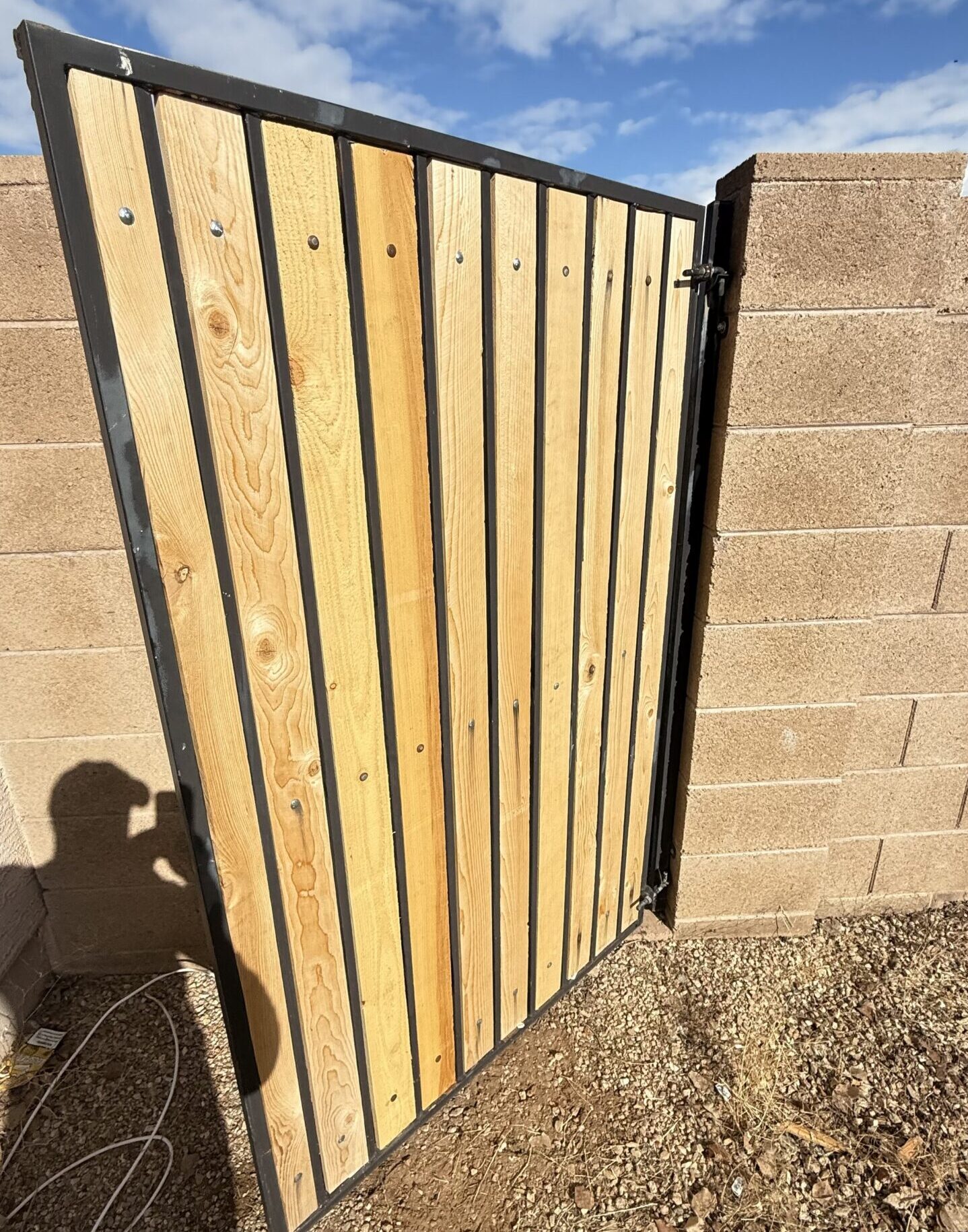
| Fence install | $1,500 – $5,000 |
| French drain | $500 – $2,500 |
Labor and Materials Breakdown #
Labor Rates by Role #
| Role | Hourly Rate |
|---|---|
| General landscaper | $50 – $75/hr |
| Landscape foreman/crew lead | $65 – $100/hr |
| Irrigation technician | $75 – $125/hr |
| Landscape designer | $75 – $150/hr |
| Landscape architect | $150 – $350/hr |
For rental properties, you rarely need a landscape architect. Architects design from scratch for high-end residential or commercial properties. Most rental operators work with a crew lead for maintenance and a designer for larger refresh projects.
Materials Reference Table #
| Material | Unit | Typical Cost |
|---|---|---|
| Sod (installed) | per sq ft | $1.00 – $2.50 |
| Mulch | per cubic yard | $30 – $80 (material only) |
| Topsoil | per cubic yard | $25 – $55 |
| Decomposed granite | per sq ft installed | $1.50 – $4.00 |
| Concrete | per sq ft installed | $6 – $17 |
| Pavers | per sq ft installed | $10 – $25 |
| Native plants | per plant | $15 – $80 |
What Landscaping Costs Look Like for Rental Properties #
This is where the general homeowner’s math breaks down. Rental property owners are running a different calculation.
Capital Improvement vs. Routine Maintenance: The Tax Distinction #
The IRS treats landscaping costs differently depending on what was done.
Routine maintenance—mowing, mulching, seasonal cleanups, irrigation adjustments, and fertilizing—is deductible in the year it occurs. These are operating expenses.
Capital improvements—installing a new patio, building a retaining wall, full xeriscape conversion, adding an irrigation system from scratch—must be depreciated over the useful life of the improvement, typically 15 years for land improvements.
This distinction affects cash flow planning. A $4,000 xeriscape conversion in Phoenix isn’t a $4,000 deduction this year. A $400/month recurring maintenance contract is.
For investors managing 5–20 properties, this is a meaningful budget line to track separately. Consult your CPA on how your specific projects are classified—the line between “repair” and “improvement” has IRS nuance.
Per-Property Budget Benchmarks #
For a portfolio of single-family rentals, here’s how we typically see annual landscaping spend break down by property type:
| Property Type | Estimated Annual Landscaping Spend |
|---|---|
| Small suburban lot (under 5,000 sq ft) | $800 – $2,400/year |
| Standard suburban lot (5,000 – 10,000 sq ft) | $1,500 – $4,000/year |
| Large lot/corner lot (10,000+ sq ft) | $3,000 – $7,500+/year |
| Vacant / between-tenant property | $200 – $600/month (cleanup + maintenance) |
Vacant properties are a separate budget category. Recurring vacant home maintenance costs more per visit because the lot is unmanaged between service cycles and typically requires more labor to reset.
Market-Specific Cost Notes #
Landscaping pricing doesn’t travel well across markets. Here’s what we see on the ground across our portfolio:
- Phoenix, AZ: Desert climate means grass is the exception, not the rule. Recurring lawn maintenance on turf properties runs $40–$80/month, but irrigation repair is where costs spike—monsoon season (June through September) drives irrigation failures across the Phoenix metro. We quote and complete irrigation repairs within 48 hours during peak season because delays cascade into dead turf and HOA violations. Xeriscape properties cost 60–70% less to maintain annually. The Phoenix landscaping context applies across AZ desert markets.
- Dallas, TX: Dallas lots tend toward Bermuda and St. Augustine grass—both fast-growing in summer heat and both requiring consistent mowing schedules from April through October. Recurring maintenance runs $60–$120/month on standard lots. Clay-heavy soil in many Dallas submarkets means grading projects cost more—drainage problems appear within 1–2 seasons without proper slope. Dallas exterior maintenance is one of our highest-volume service categories.
- Atlanta, GA: Red clay soil is the defining variable in Atlanta landscaping. It drains poorly, compacts under heat, and makes flower bed installation and grading more labor-intensive than markets with loamy or sandy soil. Budget 15–25% more for soil amendment and grading versus a comparable project in Tampa or Orlando. Full Atlanta exterior maintenance requires year-round scheduling, given the mild winters.
- Tampa, FL: Year-round mowing season, consistent irrigation demand, and HOA scrutiny across Tampa’s master-planned communities make recurring maintenance non-negotiable. Sandy soil is easier to work with than Atlanta clay, but Tampa landscaping management requires attention to drainage during heavy rain seasons. Expect $50–$100/month for standard recurring service.
- Denver, CO: freeze-thaw cycles cause more hardscape damage per year than almost any other Breasy market. Retaining wall repairs, walkway cracking, and irrigation winterization are seasonal budget items. Denver’s landscaping season compresses into May through October, which means higher per-visit labor during active months.
- Seattle, WA: Drainage is the defining challenge. Properties without properly graded yards and functioning French drains accumulate standing water through the rainy season (October through April). Hardscape spend in Seattle typically runs 20–30% higher than comparable markets because drainage integration is standard, not optional. Seattle exterior maintenance is as much about water management as it is curb appeal.
How to Reduce Landscaping Costs Without Reducing Curb Appeal #
- Convert turf to low-maintenance ground cover. In Phoenix, Las Vegas, and Denver, replacing grass with decomposed granite or native plants cuts annual maintenance costs by 40–60% after the first year. The conversion cost is real—budget $5–$10/sq ft—but the payback period in dry markets is typically under 24 months.
- Consolidate vendor relationships. Managing three separate vendors for mowing, tree trimming, and irrigation means three quote cycles, three scheduling tracks, and three failure points. A single-vendor approach reduces coordination overhead and typically reduces per-job costs through volume. This is the core reason property managers shift to managed maintenance rather than direct vendor management.
- Batch seasonal cleanups across your portfolio. Scheduling fall and spring cleanups across multiple properties in the same market on the same day reduces drive-time costs that get passed through in per-job pricing. We route crews by geography, not by request date — which is how we keep per-property cleanup costs at $100–$300 rather than the $400–$500 that ad-hoc scheduling produces.
- Invest in irrigation efficiency, not just repair. A drip system costs more upfront than spray heads but reduces water use by 30–50% and extends plant life in dry climates. The irrigation installation cost pays back in reduced water bills and fewer replacement plant costs within 2–3 seasons.
- Use before/after photo documentation. This isn’t a cost-reduction tactic directly, but it prevents scope creep. When every job is documented with completion photos, vendors don’t get paid for work that wasn’t done, and you have a baseline to catch declining quality before it becomes a full remediation project. Vendor photo accountability is one of the most underused cost controls in property maintenance.
Ongoing Maintenance Costs to Factor In #
One-time landscaping projects are a small fraction of the total cost for rental operators. The recurring line items are where annual spend accumulates.
| Recurring Service | Frequency | Annual Cost Estimate |
|---|---|---|
| Lawn mowing (standard lot) | Weekly/biweekly | $800 – $2,400 |
| Fertilization | 3–4x/year | $150 – $400 |
| Irrigation inspection | 2x/year | $150 – $300 |
| Seasonal cleanup (spring + fall) | 2x/year | $200 – $1,000 |
| Mulch refresh | 1–2x/year | $150 – $500 |
| Tree trimming | 1x/year | $200 – $800 |
| Weed control | Monthly or as-needed | $300 – $900/year |
For a standard single-family rental, total annual recurring landscaping spend typically falls between $1,500 and $4,500, depending on market, lot size, and property condition.
Portfolio owners managing maintenance budgets across multiple properties should budget toward the upper end until vendor relationships are established and baseline lot conditions are stabilized.
Frequently Asked Questions #
How much does landscaping cost per month for a rental property? #
Recurring lawn maintenance for a standard rental lot runs $40–$150 per visit, with most properties on biweekly schedules. Monthly recurring costs typically land between $80 and $300, depending on market, lot size, and whether irrigation service is included. Vacant properties between tenants run higher due to cleanup requirements.
Is landscaping a tax deduction for rental property owners? #
Routine maintenance costs — mowing, fertilizing, seasonal cleanups, mulch, irrigation adjustments — are deductible as operating expenses in the year incurred. Capital improvements like new patios, retaining walls, or full irrigation system installations must be depreciated over 15 years. Consult a CPA to classify your specific projects correctly.
What is the cheapest low-maintenance landscaping option for a rental property? #
Decomposed granite or gravel coverage with drought-tolerant native plants is the lowest long-term maintenance option. The upfront cost runs $3–$8 per sq ft installed, but eliminates mowing costs and reduces irrigation to minimal or none in dry climates. Most cost-effective in Phoenix, Las Vegas, Denver, and similar markets.
How often does a rental property need landscaping service? #
Occupied properties typically need biweekly lawn service April through October and monthly or as-needed service in winter months (climate-dependent). Vacant properties need, at a minimum, monthly cleanup service to prevent HOA violations and code citations. Markets with year-round growing seasons like Tampa and Atlanta require year-round active maintenance schedules.
How do I get landscaping quotes fast for a multi-property portfolio? #
The bottleneck is usually vendor coordination — chasing separate quotes from separate vendors for each property. We quote across an entire portfolio within 48 hours and route jobs by geography to reduce per-property costs. Request a call back to get portfolio pricing assessed across your active markets.