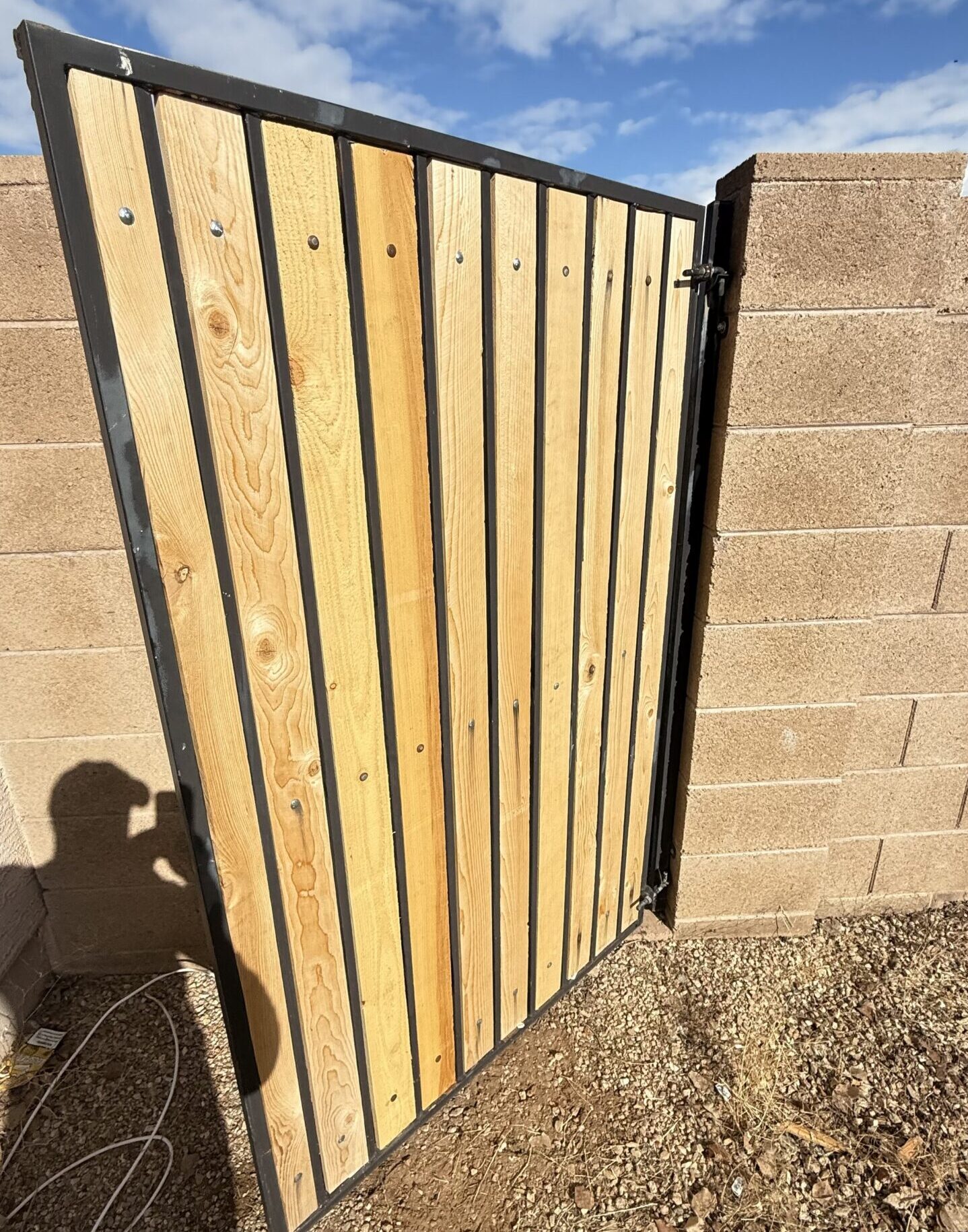
When you receive an HOA landscaping violation notice, the clock starts immediately. Your compliance deadline, called the cure period, typically runs 14 to 30 days, depending on your state and governing documents.
What determines whether you close the violation cleanly or face fines is not just fixing the issue but also the HOA landscaping violation documentation you collect before, during, and after the work is done. This guide covers every document and photo you need to build a defensible compliance record.
Need the violation corrected before the deadline? We quote in under 48 hours and complete exterior work within 5 business days.
Request a call backWhat an HOA Landscaping Violation Notice Actually Tells You #
A properly issued violation notice is more than a complaint. It is a formal record that the Association has inspected your property on a specific date, identified a condition that conflicts with your CC&Rs, and put you on notice that enforcement will follow if you do not act. Every element of the notice is operationally important.
The CC&R Section Being Cited #
The notice must cite the specific section of your Covenants, Conditions & Restrictions being violated. Pull that section before you call anyone. The language in that section defines the standard you are being held to, and your proof of correction must demonstrate compliance with that specific standard, not just general tidiness. A mowed lawn may not satisfy a CC&R section that specifies ground cover species, irrigation coverage, or approved hardscape percentage.
The Specific Violation Description #
The description matters for your documentation strategy. “Overgrown lawn” is different from “dead shrubs not replaced,” which is different from “irrigation runoff onto public sidewalk.”
Each violation type requires different proof of correction. If the notice description is vague, request clarification in writing before the deadline, because a vague dispute is harder to close than a specific one.
Your Cure Period End Date #
This is your operational deadline. In Florida, minimum notice periods under Chapter 720 require at least 14 days before a fine can be imposed. In Arizona, ARS 33-1803 requires reasonable notice, typically interpreted as 10 to 30 days depending on the condition.
In Texas, HOA enforcement timelines vary by the governing documents but are usually 30 days for first notices. In Nevada, NRS Chapter 116 mandates at least 14 days’ notice plus a hearing right before fines begin. Count the days from the notice date, not the date you received it.
| State | Minimum Cure Period | Statute / Authority | Hearing Right Before Fine? |
|---|---|---|---|
| FL | 14 days (first notice) | Florida Statute §720.305 | Yes — required before fine |
| AZ | 10–30 days (reasonable) | ARS §33-1803 | Yes — prior to fine imposition |
| TX | Typically 30 days (per CC&Rs) | Texas Property Code §202 | Depends on governing documents |
| NV | 14 days minimum | NRS §116.31031 | Yes — prior to fine imposition |
| GA | Per CC&Rs (no state minimum) | Georgia Property Owner Protection Act | Varies by HOA governing docs |
| CO | 30 days (common standard) | CCIOA §38-33.3-209.5 | Yes — required hearing right |
| WA | Per CC&Rs or board resolution | Washington HOA Act | Depends on governing documents |
How to Avoid HOA Landscape Fines Before They Escalate #
Fines for an open landscaping violation typically escalate on a fixed schedule rather than appearing as a single penalty. A common structure is a warning period with no fine, followed by a per-day or per-week fine once the cure period closes, followed by lien rights if the violation and associated fines stay unpaid long enough.
The exact schedule is set by your governing documents, not state law, so check your CC&Rs’ enforcement section for the dollar amounts and escalation interval that apply to you.
If you can’t complete the correction inside the cure period—waiting on a contractor, plant material on backorder, or an irrigation repair that needs a permit—most governing documents allow you to request a hearing or a hardship extension before the deadline passes, not after.
Submit that request in writing, reference the notice number, and state specifically what’s blocking completion and your realistic new completion date. Boards are generally more willing to grant an extension request made before the deadline than to waive a fine after it.
HOA Landscaping Violation Solutions: Your Step-by-Step Action Plan #
Resolving an HOA landscaping violation comes down to three things happening in sequence: understanding what the notice actually requires, completing the correct corrective work within the cure period, and documenting that work so the violation closes without dispute.
Start by reading the notice against your CC&Rs, not against general tidiness standards. A mowed lawn does not constitute a violation that cites ground cover percentage or irrigation coverage. Identify the cited section, the cure period end date for your state, and the specific condition described.
Most landscaping violations fall into a small number of categories, and each has a different timeline. Overgrown lawns and shrubs are usually same-day or next-day corrections.
Dead or diseased plantings that require sod installation or replanting take longer because new plant material needs establishment time, which the board may or may not factor into your cure period.
Unauthorized trees or tree trimming violations depend on access and debris removal scope. Irrigation issues require diagnosis before repair, which eats into your timeline if you wait to schedule it.
Once the corrective work is complete, close the violation the same way described in the documentation sections below: dated before-and-after photos, the contractor invoice or work order, and a written response letter referencing the notice number and CC&R section. A violation isn’t resolved until the board has that proof in hand, not just until the yard looks fixed.
If your first attempt at correction doesn’t fully satisfy the cited standard, fix that gap before resubmitting rather than letting the board send a second notice. A repeat notice on the same issue is treated differently from a first notice, often with a shorter cure period or a fine already in motion.
What to Do in the First 48 Hours After the Notice Arrives #
Most violations that escalate to fines do so not because the homeowner ignored the problem but because they lost time to disorganized documentation. The first 48 hours determine whether you build a defensible compliance record or scramble against the deadline.
Pull the Exact CC&R Language Before You Call Anyone #
Request a copy of the full governing documents from your HOA management company if you do not have them. Read the specific section cited in the notice.
Identify the exact standard: height limits, species requirements, ground cover percentages, irrigation specifications, or hardscape ratios. This is the baseline your correction must satisfy.
Take Dated Photographs of the Property Immediately #
Before any work begins, photograph the property from the same angle shown in the violation notice photos, if photos were provided. Photograph the full frontage, the specific condition cited, and any neighboring properties that may be in a similar or worse condition. Every photo should carry an automatic timestamp from your device. Do not edit or crop these images before submission.
Critical: Do not begin corrective work before photographing the existing condition. You need a documented baseline. Without before photos, you cannot prove what the property looked like on the violation date or argue selective enforcement if that becomes relevant.
Confirm the Cure Period in Writing #
Email the HOA management company or board to acknowledge receipt of the notice and confirm the compliance deadline. Ask them to confirm the cure period end date in writing.
This creates a paper trail and protects you if the deadline is later disputed. Keep every email exchange related to this violation in a single folder labeled with the notice number and property address.
Download the HOA Landscaping Violation Notice Template #
Fully formatted, print-ready document with all required fields. Open in browser and print or save as PDF.
The Documentation You Need to Build a Defensible Compliance Record #
A compliance record is not a single photo. It’s a sequenced file that shows the condition before work, the scope of work completed, and the condition after correction. An HOA board reviewing a proof submission looks for five specific categories of evidence.
1. Dated Photographs Before Work Begins #
Timestamp-verified photos of the violation as it existed on or near the inspection date. Shoot from multiple angles. Include a landmark in the frame — your house number, a street sign, or a neighboring fence — to tie the photos to the specific property. If your phone’s GPS is enabled, the image metadata will record location coordinates automatically.
2. Work Order and Contractor Assignment Records #
If you hire a contractor to resolve the violation, keep the written work order or service agreement showing the scope of work, the assigned start date, and the property address.
This document proves you acted within the cure period, even if the work extends to the deadline date. For HOA violation cleanup jobs we handle, we generate the work order at dispatch, so the timestamp is automatic from the moment the job is assigned.
3. Completion Photos That Match the CC&R Requirement #
After-photos taken from the same angle as the before-photos and the violation notice photos. The comparison has to be visible. If the violation cited overgrown grass, the after-photo must show the lawn mowed to the specified height.
If the violation cited a dead shrub, the photo must show the shrub removed and the area replanted, mulched, or otherwise brought into compliance with the specific standard in the CC&Rs.
We provide same-day completion photos on every landscaping job work order, delivered before the invoice is issued. For property managers managing large portfolios, that photo record goes directly into your compliance file without any chasing.
4. Invoice or Proof of Payment #
A dated invoice from the contractor, itemizing the work completed, the property address, and the completion date. If you completed the correction yourself, receipts for materials purchased work in place of an invoice.
The invoice is not just financial documentation; it serves as an independent third-party record of when the work was done and what it covered.
5. Written Response Letter to the HOA Board #
A signed letter on your behalf stating that the violation has been corrected, referencing the notice number, the CC&R section cited, the completion date, and the attached documentation. Keep this letter to one page.
Attach all photos, the work order, and the invoice as exhibits. Send via email with read receipt enabled and by certified mail if your governing documents require written notice by that method.
- Dated before-photos — timestamped, from violation angle, full frontage included
- Violation notice copy — original document with notice number, CC&R citation, and cure period date
- CC&R section printout — the exact passage cited, with compliance standard highlighted
- Work order / contractor agreement — scope of work, address, dispatch date
- Completion photos — same angle as before-photos, timestamped, condition clearly shown
- Contractor invoice — itemized, dated, property address on the document
- Written response letter — signed, referencing notice number and CC&R section, with attached exhibits
- Email confirmation thread — all written exchanges with HOA management or board since notice receipt
- Contractor license number — if state law or CC&Rs require a licensed provider for exterior work
- Neighboring property photos — if you intend to raise a selective enforcement defense
How to Submit Proof of Correction to the HOA #
Submitting proof of correction is not just dropping photos in an email. The submission must be sequenced, labeled, and sent via the method your governing documents specify.
- Step 1: Compile the full documentation package before sending anything. All photos labeled with date and description, work order, invoice, and written response letter in one folder.
- Step 2: Confirm the submission method required by your governing documents. An email to the management company is standard, but some HOAs require certified mail or a specific management portal upload.
- Step 3: Email the package to the management company with a subject line formatted as: [Notice No.] — Proof of Correction — [Property Address] — [Completion Date]. Request a read receipt.
- Step 4: Follow up within 5 business days if you have not received written confirmation that the violation has been marked resolved. HOAs are not required to acknowledge immediately, but a documented follow-up protects you.
- Step 5: Retain the full file regardless of closure. If the same condition recurs and you receive a future notice, your prior compliance record is relevant to the hearing process.
Timing note: Most state HOA statutes do not specify how long the Association has to acknowledge compliance after you submit proof of correction. In practice, expect 7 to 21 business days. If you receive a fine notice after submitting documentation, respond immediately in writing with your submission date and proof of delivery, and request the fine be rescinded.
Need the violation corrected before the deadline? We quote in under 48 hours and complete exterior work within 5 business days.
Request a call backThe Selective Enforcement Defense #
Selective enforcement is a legal defense available to homeowners who can demonstrate that the HOA enforced the CC&Rs against them but not against other owners with identical or worse conditions.
It is not a general complaint about unfairness. It requires documented evidence of specific neighboring properties in similar non-compliance that the HOA did not cite.
What Selective Enforcement Requires #
Photographs of neighboring properties showing the same or worse condition, taken within a reasonable time window of your own violation date. Written records of any prior complaints you submitted about those properties.
Documentation that no notices were issued to those owners. The defense is only viable if you can show a pattern, not just one adjacent property.
When to Use It #
Raise selective enforcement at the hearing stage, not in your initial violation response. Use the cure period to correct the violation regardless, because a board can reject selective-enforcement claims, and the fine-escalation clock does not stop during the dispute. The cleanest outcome is a corrected property plus a separately filed, documented selective enforcement record.
Why Vendor Documentation Determines Whether You Close the Violation on Time #
The most common reason HOA landscaping violations escalate beyond the first notice is not homeowner neglect. It’s a contractor failure. A vendor who schedules the job but does not show up, completes partial work without photographing the result, or delivers an invoice without the completion date eats into your cure period with nothing to show the board.
The Re-Dispatch Problem #
If your first contractor does not show up within the cure period and you have two days left, you are back to day one on finding coverage. That is the operational scenario that converts a straightforward violation into a fine.
We built our HOA violation cleanup service specifically around this problem. If a dispatched provider does not confirm within the required window, we re-dispatch immediately. The compliance deadline does not move because a vendor ghosted.
What Contractor Documentation Must Include #
When a contractor completes corrective work for an HOA violation, their documentation must be specific enough to satisfy the board. A generic “landscaping services” invoice does not close a violation that cited a specific CC&R section. The work order must reference the scope of work in language that maps to the violation description.
Across the landscaping work orders we complete across our markets in Phoenix, Tampa, Dallas, Atlanta, Las Vegas, Denver, and Seattle, every completion photo is timestamped and tied to the specific work order.
That creates a traceable record from dispatch to completion that property managers can forward directly to HOA management without editing or explanation.
Why Before-and-After Photos From Your Contractor Are Not Optional #
An HOA board reviewing a proof-of-correction submission has no obligation to accept your description of what was done. They are reviewing evidence.
A contractor who delivers only an invoice, without before-and-after photos, leaves the entire burden of visual proof on the homeowner. Our completion photos protocol exists because same-day photo documentation is not a feature, it’s how compliance records get closed without dispute.
What HOA Violation Correction Typically Costs #
Cost depends on the type of violation, the extent of overgrowth or damage, and how quickly the work needs to be completed relative to the cure period. Three variables drive most of the price range.
| Violation Type | Typical Correction Scope | Cost Driver |
|---|---|---|
| Overgrown lawn or shrubs | Mow, trim, edge, haul clippings | Yard size, overgrowth extent |
| Dead or diseased plantings | Remove, replace, mulch or rock fill | Plant species, quantity, disposal |
| Bare soil / no ground cover | Sod installation, seed, or approved rock | Square footage, material type |
| Tree or branch encroachment | Tree trimming or limb removal | Tree height, access, debris removal |
| Irrigation runoff or failure | Diagnosis, head replacement, zone repair | System age, number of zones |
| Gutter overflow / debris | Gutter cleaning, downspout check | Linear footage, debris load |
Speed affects cost. A job that needs completion within 5 days in a compressed seasonal window, such as summer heat in Phoenix or storm season in Tampa, will price differently from the same job scheduled in a slack period. We quote every HOA violation cleanup within 48 hours. The quote is flat-scope, not an estimate that grows on arrival.
Frequently Asked Questions #
Can an HOA fine me before the cure period expires? #
In most states, no. Florida, Arizona, Nevada, and Colorado all require the Association to provide a cure period before imposing a fine. If you receive a fine notice before the deadline in your violation notice, request a hearing immediately and reference the state statute and the notice date in your written request.
What counts as proof that a landscaping violation has been fixed? #
Timestamped before-and-after photographs, a dated contractor invoice or work order, and a written response letter referencing the specific CC&R section. The combination of all three is stronger than any single document. A photo without a work order can be disputed; a work order without a photo is not visual proof.
Can I dispute an HOA violation if my neighbor’s property is worse? #
Yes, but only through the hearing process. This is the selective enforcement defense. You need photographic evidence of neighboring properties in similar non-compliance, taken within the same time window. Correct your own property first. A selective enforcement claim does not pause the fine escalation timeline.
What happens if my contractor finishes the work but does not submit photos? #
The documentation burden shifts entirely to you. Take your own completion photos immediately after the contractor leaves. If the contractor invoices without photo delivery, follow up in writing the same day. Contractors who do not provide completion photos are a compliance risk on HOA violation timelines.
How many photos do I need to submit as proof of correction? #
At minimum, one before photo and one after photo from the same angle as the violation photo, plus one full-frontal shot. In practice, 4 to 6 photos, including close-ups of the corrected area and the wider yard view, give the board enough visual evidence to mark the violation resolved without requesting additional documentation.
What’s the fastest way to resolve an HOA landscaping violation? #
Fix the specific condition the notice cites against the exact CC&R standard, not against general appearance, and document it with dated before-and-after photos, a contractor invoice, and a written response letter referencing the notice number. Violations close fastest when the correction matches the cited standard on the first attempt rather than requiring resubmission.
Can I get more time to fix an HOA landscaping violation? #
In most cases yes, if you request a hearing or hardship extension before the cure period deadline rather than after. State specifically what’s delaying the work and propose a new completion date. Requests made after the deadline has passed are harder to win than requests made in advance.
How much can an HOA fine me for a landscaping violation? #
Fine amounts follow your state and your HOA’s recorded fine schedule, not one national number. Florida caps landscaping fines at $100 per violation and $1,000 in aggregate for continuing violations under Fla. Stat. §720.305, and Colorado caps at $500 per violation under C.R.S. §38-33.3-209.5.
Arizona, Texas, Georgia, Nevada, and Washington set no statutory cap, so the ceiling is whatever your HOA’s recorded fine schedule allows, typically $25 to $100 per violation for landscaping in practice. Request the recorded fine schedule from your board before assuming a figure, since CC&Rs set the real number in states without a cap.
How do I write a dispute letter for an HOA landscaping violation? #
Open with the notice number and date, cite the exact CC&R section referenced in your violation notice, and state your specific ground for dispute: a vague violation description, a cure period calculated incorrectly, or comparable non-compliance on neighboring properties the board hasn’t cited (the selective enforcement defense above).
Attach dated photos supporting your position and request a hearing in writing before the cure period deadline, not after. Keep the letter factual and reference-based rather than argumentative. Boards respond faster to a letter that cites the governing document section than one that just asserts unfairness.
Get This Handled Before the Deadline #
We quote HOA violation cleanup within 48 hours and complete the work within 5 business days. Same-day completion photos delivered on every job.
Request a Call Back